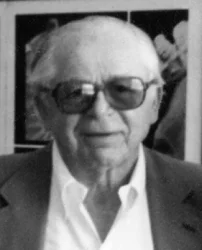
Isao Takahata
Isao Takahata expanded what audiences could expect from animation. A director, screenwriter, and producer, he moved from intimate portraits of everyday life to devastating stories of war and elaborate retellings of Japanese folklore. As a co-founder of Studio Ghibli, he helped build a home for ambitious animation, while his own films followed a quieter, more observational path than those of his close collaborator Hayao Miyazaki.
From French literature to animation
Takahata was born in Ise, Mie Prefecture, on 29 October 1935. He studied French language and literature at the University of Tokyo, graduating in 1959. His interest in French culture and cinema shaped his artistic outlook, but after university he joined Toei Animation, where he trained in the emerging field of Japanese feature animation.
At Toei, Takahata worked as an assistant director and collaborated with young animators, including Miyazaki. His first feature as director was The Great Adventure of Horus, Prince of the Sun (1968). The production was unusually collaborative and ambitious, though it struggled commercially at the time. It later became recognized as a landmark that helped define a more sophisticated direction for Japanese animation.
Over the next decade, Takahata worked across feature films and television. He directed Panda! Go, Panda! with Miyazaki, and helped shape animated adaptations of Heidi, Girl of the Alps and Anne of Green Gables. These projects showed his interest in believable environments, carefully observed behavior, and stories that allowed character development to unfold at an unhurried pace.
A realist with a wide range
Takahata’s films did not rely on one visual style. Grave of the Fireflies (1988), his account of two siblings trying to survive in wartime Japan, is among the most emotionally demanding animated films ever made. The story was adapted from Akiyuki Nosaka’s semi-autobiographical novella; Takahata’s own childhood experience of surviving an air raid in Okayama informed his understanding of wartime civilian suffering.
Only Yesterday (1991) turned to adult memory and everyday choices, following a woman who revisits her childhood while considering the life she wants. Pom Poko (1994) used comic folklore about shape-shifting tanuki to explore rapid development and the destruction of rural habitats. My Neighbors the Yamadas (1999) took yet another direction, presenting family life through loose watercolor-like images and episodic humor.
In The Tale of the Princess Kaguya (2013), his final feature, Takahata adapted a classic Japanese folktale with expressive brushwork and a sense of motion that made the film feel almost hand-drawn in real time. The film received an Academy Award nomination for Best Animated Feature.
Studio Ghibli and later years
Takahata co-founded Studio Ghibli in 1985 with Miyazaki and producer Toshio Suzuki. While Miyazaki became the studio’s best-known director, Takahata was central to its artistic range. He also produced several of Miyazaki’s films, and their partnership combined close friendship, creative respect, and occasional rivalry.
His work earned major recognition in Japan and abroad. In 1998 he received Japan’s Medal of Honor with Purple Ribbon, and in 2015 France made him an Officer of the Order of Arts and Letters. He died of lung cancer in Tokyo on 5 April 2018, aged eighty-two.
Legacy
Takahata’s films remain distinctive for treating animation as a medium for adult reflection as well as fantasy and comedy. He was attentive to ordinary gestures, social change, and the emotional consequences of history. From the children in Grave of the Fireflies to the family scenes in My Neighbors the Yamadas, his work invited viewers to look closely at lives that could easily be overlooked.