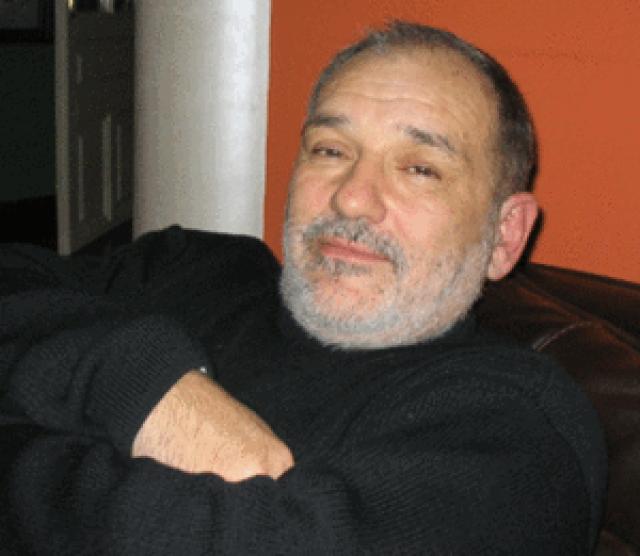
Jordje Balashevich
 Bosnia and Herzegovina
George Balasevic - A Biography
George Balasevic is an outstanding Serbian poet, songwriter, and singer. He was born to father Jovan Balasevic, a Serb, and mother Veronika Dolenec, who was half Hungarian and half Croatian. He has a sister named Jasna. His grandfather's surname was Balasev, but in 1941, to avoid "Hungarization" as an Orthodox Christian, he changed his surname to Balasevic. George was born and raised on Jovana Cvijica Street in Novi Sad, Serbia (a street well known to all his fans), where he currently lives with his wife and three children.
George began writing poetry in elementary school. He dropped out of high school because he hated subjects like math, physics, and chemistry, but managed to obtain a high school diploma as a part-time student and passed the university entrance exam in geography (he openly admits that he chose it because the entrance exam didn't require math). He never attended university and instead formed the band "Zetva" ("Harvest") in 1977. Immediately after its creation, Zetva recorded the single "U razdeljak te ljubim" ("I love you with a parting"), which sold 180,000 copies, a huge success by Yugoslav standards. In 1978, Balasevic left Zetva and, together with Verica Todorovic, formed the band "Rani Mraz" ("Early Frost"). The band made its debut at the Opatija '78 music festival with the song "Moja prva ljubav" ("My First Love"). During this time, Biljana Krstic and Bora Djordjevic joined the band, and together they recorded the song "Racunajte na nas" ("Count on Us") written by Balasevic, which celebrated the young generation as the inheritors of the communist revolution. The song became popular with both the authorities and the people, serving as a kind of anthem for the generation.
After several months of collaboration, Verica and Bora left the band (Bora soon formed the band Riblja Corba), and Biljana and Balasevic recorded their first album "Mojim mami umesto maturke slike u izlogu" ("To My Mom Instead of a Prom Picture in the Shop Window"). At the Split '79 music festival, Balasevic won first prize with the single "Panonski mornar" ("Pannonian Sailor"). Over the next few months, he performed eight sold-out shows at Belgrade's "Dom Sindikata" and a new star rose. From 1980-82, Balasevic served in the army in Zagreb and Pozarevac, but still found time to write songs for Zdravko Colic and "Zlatna Krila."
In the late 1980s, "Rani Mraz" released their second and final album, and the band soon disbanded. The album reaffirmed Balasevic's status and gave the world many unforgettable songs such as "Pricha o Vasi Ladachkom" ("The Story of Vasa Ladacki") and "Zivot je more" ("Life is a Sea"), which remain popular even 20 years later. Balasevic began his solo career in 1982 with the album "Pub," which was also a great success. Shortly after, he played a role in the TV series "Pop Cira i pop Spira." During his 1982/83 tour, Balasevic filled the Belgrade "Centar Sava" hall for the first time. His concerts at "Centar Sava" became his trademark for years to come. His next two albums, "Celovecernji The Kid" (1983) and "003" (1985), also achieved the same success, solidifying Balasevic's reputation as a poet-songwriter.
His next album, "Bezdan" ("Abyss"), released in 1986, marked a new phase in his career. The recording was produced by Djordje Petrovic and arranged by Aleksandar Dujin. They became the foundation of Balasevic's supported group "The Unfuckables" and part of his performances. The next album, "U tvojim molitvama" ("In Your Prayers"), was his first and last live album. The album was recorded at his concerts in Sarajevo (Zetra Hall), Zagreb (Ledena Dvorana and Salata), Belgrade (Centar Sava), and Novi Sad (Studio M) in 1986 and 1987. In addition to well-known songs, the album included several previously unreleased songs, one of which was "Samo da rata ne bude" ("Just Let There Be No War"). The main part of this song was performed by a large children's choir, which, along with Balasevic, warned people about the imminent threat of war (which actually started three years later), proclaiming an anthem of pacifists throughout the still-existing Socialist Federal Republic of Yugoslavia.
The same sense of impending disaster dominates his next album, "Panta Rei" (1988). The song "Requiem" is dedicated to the recently deceased Josip Broz Tito and those he identified with his ideals. The atmosphere of the album is gloomy and agonizing, reflecting Balasevic's feelings about the approaching times. Renowned guitarist Elvis Stanic participated in the recording of the album "Tri posleratna druga" (1989) ("Three Post-War Friends"). Josip Kiki Kovac joined "The Unfuckables" on the album "Marim ja..." (1991) ("I Don't Care").
After the war broke out, Balasevic became isolated. He was forced to stop working with Croatian artists such as Elvis Stanic, and the pace of working on a new album was disrupted. His next album, "Jedan od onih zivota" (1993) ("One of Those Lives"), contains songs such as "Krivi smo mi" ("It's Our Fault") and "Covek sa mesecom u ocima" ("A Man with the Moon in His Eyes"), which harshly criticized and condemned the ongoing war.
After a long hiatus, Balasevic released the album "Naposletku" (1996) ("In the End"). The change in mood was evident, and it became more or less prevalent on all his subsequent albums. The album mainly used acoustic instruments, with a dominant role for the violin, as well as a wide range of wooden wind instruments.
The album "Devedesete" (2000) became his most politically charged album. He engaged in extensive criticism of the existing political situation in Serbia, openly mocking Slobodan Milosevic in the song "Legenda o Gedi Gluperdi" ("Legend of Geda the Idiot"), criticizing the police who guarded the corrupt system and dispersed youth demonstrations in the song "Plava balada" ("Blue Ballad"), expressing disgust for the 90s in the song "Devedesete" ("The 90s") (the first line of the chorus went: "Ma, jebite se devedesete"), providing a anthem for the young demonstrators in "Ziveti slobodno" ("Live Freely"), and addressing his lost friends from Croatia and Bosnia in the song "Stih na asfaltu" ("Verse on the Asphalt") while still maintaining a sense of patriotism in the song "Dok gori nebo nad Novim Sadom" ("While the Sky Is Burning over Novi Sad"), which is about the NATO bombing of the city. This album vividly conveyed the atmosphere in Serbia in the year when Slobodan Milosevic's rule ended.
Afterward, he returned to romance. The album "Dnevnik starog momka" (2001) ("Diary of an Old Bachelor") contains 12 songs, each with a female name, and each sung about a new girl. Balasevic repeatedly claimed that these girls and songs were purely fictional, and the song titles were written in an acrostic form, spelling out "Olja je najbolja" ("Olja is the best") (Olja being a pseudonym for his wife Olivera Balasevic).
His latest album, "Rani mraz" (2004) ("Early Frost"), continues the style developed in the albums "Naposletku" and "Dnevnik starog momka." He is often criticized for plagiarism and writing songs that sound too similar to each other, but he strongly denies such criticism, saying, "Balasevic should sing Balasevic songs."
George Balasevic's songs can be divided into three groups: emotional songs (love songs and nostalgic songs), politically charged songs, and ironic songs. The emotional songs are characterized by nostalgia and lyrical mood, influenced by poets such as his relative Mika Antic and the songwriter Arsen Dedic. Balasevic acknowledged that he owed a debt to Arsen Dedic.
His political songs embody ideas of pacifism and tolerance, and he has often been accused of nostalgia for Yugoslavia. He became known for his patriotism, but not everyone knows that he spoke out against Serbian military leaders and criticized both pro-Croatian and pro-Bosniak forces, which led to his near-total isolation in the 1990s. His political positions can also be traced in his album "Devedesete," where he expressed his dissatisfaction with the government and the war.
His concerts are always very long, lasting more than 4 hours, and almost always played to a full house of his fans, who faithfully attend his concerts wherever they are held. His concerts are more like cabaret shows than typical pop concerts.
His first post-war concert in Zagreb (at Ledena Hall, accommodating 10,000 people) on December 13, 2002, was sold out three months in advance, and another concert was planned for the next day, which also took place in front of a full audience. It was an unprecedented success for Zagreb.
His traditional New Year's concerts at the "Centar Sava" hall (with a capacity of 3,672 people) also consistently sell out. In 1982/83, Balasevic filled the "Centar Sava" hall for the first time, and regular New Year's concerts began in 1986. In the 1990s and 2000s, he performed for up to 11 consecutive nights (4 consecutive concerts in 1993/94, 10 in 1996/97, 9 in 1997/98, 7 in 1998/99, and 11 in 2001/2002). The fact that he sings in Serbo-Croatian does not prevent him from performing worldwide (even in Sydney).
In the early days of the internet in the 1990s, Balasevic fans formed two internet fan clubs called "Oaza" and "(ne)normalni balasevicevci" ("(un)normal Balasevic fans"). The founder of the "(ne)normalni balasevicevci" club went further and formed a tribute band called "(ne)normalni bend," which initially played at club meetings but now actively performs in Serbia and some other countries, playing Balasevic's songs.
Balasevic has a huge army of fans in all former Yugoslav republics. Apart from Serbia, he frequently performs in Croatia and Slovenia. Although he has many old fans who were infected with his songs in the 1980s when Yugoslavia still existed, the majority of his fans are "younger than some of his songs," as he likes to say, having grown up during the wars. During the war years, he was not invited to Croatia because of his Serbian origin, but his concerts in Slovenian cities like Ljubljana and Maribor were attended by a large Croatian community (mostly young people), often outnumbering the Slovenes. His concerts during wartime (such as the concert in Budapest on April 2, 2000, attended by both Croats and Serbs) became a demonstration of Serbs and Croats' ability to coexist harmoniously.
Currently, a small group of people from Split (calling themselves "Optimists") has gained popularity by traveling long distances to attend Balasevic's concerts since he couldn't perform in their city. They have become a symbol of persistence and devotion among Balasevic fans. Eventually, Balasevic did perform in Split on December 16, 2004.
Additionally, there is a fan club in Zagreb called "Remokreni."
Starting with one of his early songs, "Racunajte na nas" (1978) ("Count on Us"), Balasevic writes politically charged songs. Along with another early single, "Tri put sam video Tita" (1981) ("I Saw Tito Three Times"), they summed up his early political positions: pan-Yugoslavism, patriotism, and Titoism. Despite this, uncompromising conservatives accused him of playing pop music, which was seen as a corrupting influence from the West.
From the mid-1980s, new moods appeared in Balasevic's songs. Sadness and depression (especially in songs like "1987" and "Samo da rata ne bude" (1987), as well as in the album "Panta Rei" (1989)) became harbingers of the bloody breakup of Yugoslavia, which occurred in the early 1990s. In his songs and concert speeches during that time, Balasevic expressed his disappointment and sadness over the fact that fratricidal war became possible in Yugoslavia, which he had once admired. He captured all his thoughts and feelings at the time in his book "Tri posleratna druga": "While we were growing up, the greatest offense to us was when our Homeland was called an unnatural, artificial creation. When we grew up, we realized that it was true." He openly criticized the negative and harmful aspects of the political and economic system change, as well as Serbian, Croatian, and Slovenian nationalism.
In the following years, Balasevic encountered serious problems with the regime of Slobodan Milosevic because he refused military service and switched sides to the opposition. He often criticized and ridiculed Milosevic and other Serbian politicians at his concerts. The pressure on him increased after the NATO bombing of Serbia and Montenegro in early 1999 when his family relocated to Maribor, Slovenia, but he remained in his family home in Novi Sad because he couldn't leave his hometown in difficult times.
In 2000, he participated in demonstrations during and after the fall of Slobodan Milosevic's regime.
In 1996, he became a goodwill ambassador for the United Nations High Commissioner for Refugees for setting aside his anti-war convictions during the Yugoslav wars and being the first Serbian artist to perform a concert in war-torn Sarajevo, Bosnia and Herzegovina.
Of course, his active criticism of society and his mega-popularity in all former Yugoslav republics easily sparked discussions about his personality and his work.
For example, in 1991, when Croatia and Slovenia expressed their desire to secede from the SFRY, he composed the song "Bluz za bracu Slovenca" ("Blues for the Slovenian Brothers"), openly criticizing the Slovenes for their plans to separate from Yugoslavia and even making fun of them. Later, he apologized for this song, and his family even lived in Maribor for some time.
Some of his critics claim that in the song "Ne lomite mi bagrenje" (1985) ("Don't Break My Acacias"), he metaphorically expressed his dissatisfaction with the Albanians in the Serbian-Albanian conflict in Kosovo. Balasevic denies these assumptions, saying that it is just a love song and that only a person lacking sanity could see a connection between his song and the Kosovo conflict.
He is often accused of lying when he says that he makes music not for money or fame but for his fans, and the money collected at concerts doesn't matter to him. He claims that only sadness and nostalgia bring him any income.
After the breakup of Yugoslavia, Balasevic refuses to perform songs like "Racunajte na nas" ("Count on Us") and "Tri put sam video Tita" ("I Saw Tito Three Times"), stating that he wrote those songs not because he wanted to but because he had to. Many saw this statement as a betrayal of his beliefs for commercial gain.
Some claim that he is a hypocrite when he says that he doesn't care about money and then charges high prices for concert tickets. However, Balasevic argues that he needs the money to finance his concerts and maintain the quality of his performances.
Overall, George Balasevic's career has been marked by his active engagement with society and his popularity among fans in the former Yugoslavia. His songs have become anthems for generations, expressing their emotions, views, and experiences. Despite criticism and controversy, Balasevic continues to be an influential figure in the music industry and his songs continue to resonate with audiences.


