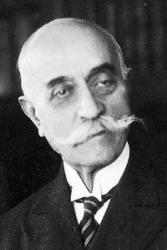
Isoroku Yamamoto
 Japan
JapanBiography of Isoroku Yamamoto
Isoroku Yamamoto was a Japanese naval officer, Admiral of the Fleet (posthumously), who achieved significant success in the early stages of World War II by skillfully combining various types of Japanese naval forces. The main force became the naval aviation.
Early Life
Isoroku Yamamoto was born on April 4, 1884, in Nagaoaka, Niigata Prefecture. He was the sixth child in a family of a impoverished samurai Takanō, but later took the surname of his adoptive father. In 1904, Yamamoto graduated from the Naval Academy. He received several injuries during the Battle of Tsushima, including the loss of two fingers on his hand. After the war, he served on various ships. In 1915, he came up with the idea of creating a fleet of floating airfields. A year later, he graduated from the Naval War College, and from 1919 to 1921, he studied at Harvard University. After returning to Japan, he served as an observer on several European ships. In 1924, Yamamoto became the commander of the aviation corps in Kasumigaura, and from 1925 to 1929, he served as a military attaché in Washington. Upon his return, he commanded the aircraft carrier "Akagi" and received the rank of rear admiral. From then on, Yamamoto focused almost exclusively on naval aviation. From 1936 to 1939, he served as the Deputy Minister of the Navy, and from 1939, he commanded the Combined Fleet. The sailor advocated for expansion in Southeast Asia and the Pacific. By the late 1930s, thanks to innovation and the ability to obtain significant funds from the government, Yamamoto created one of the most modern fleets in the world, with aircraft carriers forming its core.
Attack on Pearl Harbor
By 1939, Japanese military and political leaders decided that it was necessary to defeat the US fleet in order to force Americans to halt their expansion in the Pacific Ocean. Yamamoto, who was well aware of the capabilities of the United States, feared the defeat of the small island nation. In the summer of 1941, during discussions with senior naval officers about the possible course of the war with the United States, Yamamoto cautiously warned Prime Minister Konoe, "If you say that we need to fight, in the first six months of the war against the United States and England, I foresee a continuous chain of victories. But I must say that if the war lasts for two or three years, then I am not confident in our ultimate victory." Despite the pessimistic assessments of experienced officers, the Japanese government decided to go to war. Yamamoto prepared an operation to destroy the American fleet at Pearl Harbor. The aircraft carriers, which he had advocated for the past 18 years, played a decisive role in the success of the attack. Confident in the success of the attack, Yamamoto feared that this success would only spur the enemy to fight for dominance in the Pacific Ocean.
The Battle of Midway
On November 26, 1941, Yamamoto led the combined fleet to Hawaii. On December 2, when it became clear that diplomatic negotiations with the US had failed, he informed Admiral Nagumo that the start of the war was scheduled for December 8. It was expected that the attack on Pearl Harbor would take place after the official declaration of war, but the diplomats delivered the text of the ultimatum late. On the morning of December 8, Japanese aircraft carriers attacked and destroyed four battleships and most of the aircraft at the airfields. Only the aircraft carriers, which were not present at the base, were not sunk. The success was largely achieved thanks to the pre-training of sailors and pilots, as well as Yamamoto's insistence.
After the defeat at Midway, the Japanese command was forced to abandon the offensive and switch to defense. Yamamoto attempted to hold back the enemy while strengthening the island defense perimeter. In April 1943, he personally led "Operation I-GO," a series of air attacks as part of a strategic air offensive against Guadalcanal and the southeastern part of New Guinea.
On April 18, 1943, Yamamoto's bomber, escorted by 12 fighters, was shot down during a specially prepared operation by American planes near the island of Bougainville. On the day of his death, the Japanese government promoted him to the rank of Admiral of the Fleet. His body was cremated in the headquarters building in Buin, and a small stone was placed nearby.
Thanks to Admiral Yamamoto, the importance of aircraft carriers was fully revealed. After the war, all great naval powers sought to build aircraft carriers. In terms of abilities and personal qualities, the creator of the aircraft carrier fleet became the most outstanding Japanese naval commander after Togo.