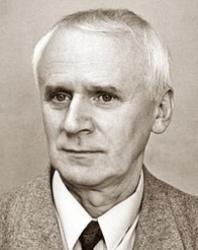
Istvan Kertesz
 Hungary
- István Kertész: A Life in Music
- Career in Hungary
- International Breakthrough
- Major Appointments
- Tragic Demise
- Legacy
István Kertész: A Life in Music
Early Life and Musical EducationIstván Kertész was born in Budapest, Hungary, in 1929 to Jewish parents. From an early age, he showed exceptional musical talent and began studying violin at age six and piano at age twelve. In 1953, he graduated from the Budapest Academy of Music, where he studied composition under Leo Weiner, Zoltán Kodály, and Rezső Kokai. His conducting teachers were János Ferencsik and László Somogyi.
Career in Hungary
After completing his studies, Kertész served as conductor of the orchestra in Győr for two years. He then worked at the Budapest Opera for two years. In 1956, after the suppression of the Hungarian Revolution, he left Hungary with his wife, opera singer Édith Gabry, and their infant daughter.
International Breakthrough
In the late 1950s, Kertész made his operatic debut at the Hamburg Opera, quickly establishing a reputation for his masterful interpretations of operas by Beethoven, Verdi, and particularly Mozart. In 1960, he became the director of the opera house in Augsburg. In 1961, he made his debut at the Salzburg Festival with Mozart's "Die Entführung aus dem Serail."
Major Appointments
From 1964 to 1967, Kertész served as music director of the Cologne Opera. Concurrently, from 1965 to 1967, he was the chief conductor of the London Symphony Orchestra. His tenure with both organizations was marked by critical acclaim and enthusiastic audience response.
Tragic Demise
In 1973, at the height of his career, tragedy struck. While on tour in Israel, Kertész drowned while swimming. His untimely demise at the age of 43 was a devastating loss to the world of music.
Legacy
István Kertész's legacy extends beyond his tragically short life. He was renowned for his meticulous attention to detail, his deep understanding of musical structures, and his ability to convey profound emotions through his conducting. Among his notable recordings are the first complete cycle of Antonín Dvořák's symphonies, all the symphonies of Johannes Brahms and Franz Schubert, as well as works by Béla Bartók, Ludwig van Beethoven, Giuseppe Verdi, Zoltán Kodály, Wolfgang Amadeus Mozart, Ottorino Respighi, and Gioachino Rossini.