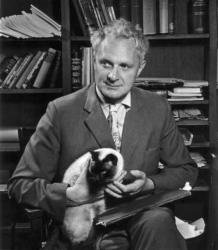
Ivan Evdokimov
- Early Life and Revolutionary Involvement
- Literary and Art Historical Beginnings
- Moscow and Literary Recognition
- Novels and Literary Struggles
- Return to Art History
- Legacy
Early Life and Revolutionary Involvement
Born into a humble family in Kronstadt, Russia, Nikolai Fedorovich Evdokimov spent his childhood in a village near Lake Kubenskoye. His formal education was cut short, and he began working as a trader, clerk, and telegraph operator. In 1903, Evdokimov joined the Bolshevik organization in Vologda, actively agitating among workers and soldiers. In 1905, he participated in demonstrations in St. Petersburg.
Literary and Art Historical Beginnings
In 1908, Evdokimov lost interest in revolutionary politics and focused on his literary and art historical interests. He published his first article in 1908 and continued to write poetry and prose while pursuing studies at the Vologda Gymnasium. After graduating, he enrolled in the historical and philological faculty of the University of St. Petersburg. Due to financial constraints, he returned to Vologda in 1915 and worked as a clerk.
Moscow and Literary Recognition
In 1922, Evdokimov moved to Moscow and began his career as an art editor. He became actively involved in the Northern Circle of Art Lovers and published in their journal, "Vremennik." His writing career took off in 1925 with the publication of his novel, "The Bells," which garnered critical acclaim and established him as a prominent literary figure.
Novels and Literary Struggles
Riding on the success of "The Bells," Evdokimov left his job and dedicated himself fully to writing. He published several more novels, including "Pure Ponds" (1927) and "Beyond the Lake" (1928-1931), which received mixed reviews. Critics accused him of "philistinism" and "banality," which deeply affected his literary reputation.
Return to Art History
Disillusioned with the reception of his literary works, Evdokimov returned to art history in 1938. He wrote several biographies of Russian artists, including Surikov, Repin, Levitan, and Kramskoy. Despite a brief resurgence of interest in his writing in the 1980s, his literary legacy remains overshadowed by his contributions to art history.
Legacy
Nikolai Evdokimov's literary and art historical works offer valuable insights into the cultural and political landscape of early 20th-century Russia. While his literary reputation has waned, his art historical research and writing continue to be recognized as significant contributions to the field.