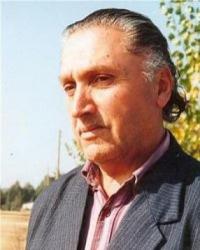
Ivan Golubtsov
- Early Life and Education
- Academic and Public Life
- Archiving and Research
- Imprisonment and Exile
- Return to Academia and Cartography
- Recognition and Legacy
Early Life and Education
Ivan Alexandrovich Golubtsov was born into a family of renowned scholars. His father, Alexander Petrovich, was an expert in church archaeology, while his mother, Olga Sergeevna, was the daughter of the rector of the Moscow Theological Academy. Golubtsov was the eldest of nine children, including priests, a monk who later became Archbishop Sergius, and several other notable figures.
Golubtsov excelled in his studies, graduating with a gold medal from the Sergiev-Posad Gymnasium in 1905 and later from the History and Philology Faculty of Moscow University in 1910. His undergraduate thesis on serfdom in 19th-century Russia earned him recognition as a promising historian. He was retained by the university as a prospective professor.
Academic and Public Life
Golubtsov began his academic career as a lecturer in Russian history at the Poltoratskaya Higher Women's Law Courses and the Priponskaya Moscow Women's Gymnasium. He also pursued his research, publishing an article on a petition from a Russian secret agent in 1687.
During World War I, Golubtsov enlisted in the military, serving as a second lieutenant in the 29th Infantry Regiment. He actively participated in politics, becoming the chairman of the Sergiev-Posad Town Council and the secretary of the Council of Parish Churches.
Archiving and Research
After the Bolshevik Revolution, Golubtsov devoted himself to archival work, rescuing valuable documents from destruction. He taught Russian history at Moscow State University and held various archival positions, including senior archivist-consultant for the Central Archive of the RSFSR.
Golubtsov's research continued alongside his administrative duties. He published "The Betrayal of the Nagi" and other works that established him as a leading scholar in Russian history.
Imprisonment and Exile
In 1930, Golubtsov was arrested as part of the "Historical Case." He was sentenced to three years in exile in the Komi-Perm region, where he worked as an accountant, economist, and manager.
Return to Academia and Cartography
Upon his return from exile in 1933, Golubtsov was unable to obtain a residence permit in Moscow. He settled in Kashira, where he worked for the NKVD transcription bureau. In 1937, he resurfaced in Moscow, where he engaged in historical cartography.
Golubtsov's expertise in historical geography led him to produce numerous historical maps that became instrumental in Soviet education and research. Historian Yakov Nikolaevich Shchapov credits Golubtsov with a transformative role in the development of Soviet historical cartography.
Recognition and Legacy
Golubtsov joined the Soviet Geographical Society and the Archaeological Commission of the USSR Academy of Sciences. In 1963, he defended his doctoral dissertation, earning the degree of Doctor of Historical Sciences.
Ivan Alexandrovich Golubtsov's contributions to Russian historiography, archival science, and cartography ensured his enduring legacy in the field of historical research.