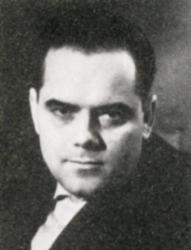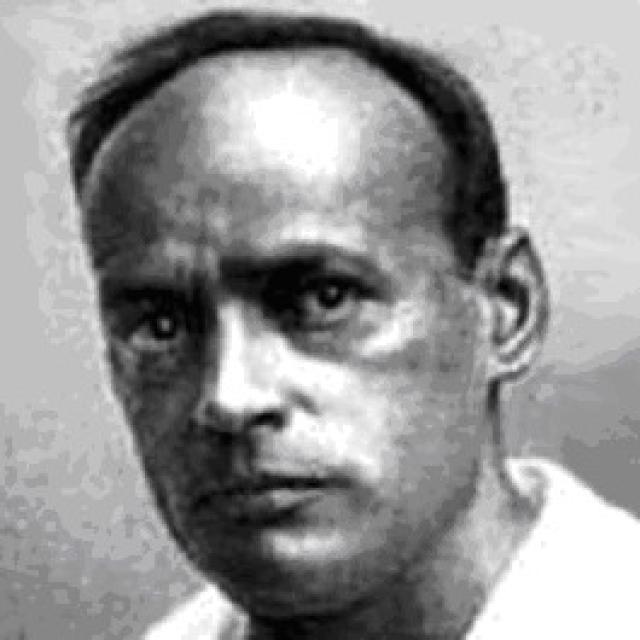
Ivan Kasatkin
- Early Life and Revolutionary Activities
- Political Awakening and Underground Activities
- Literary Beginnings and Collaboration with Gorky
- Revolution and Involvement in Soviet Institutions
- Service in the VChK and Literary Coordination
- Arrest and Execution
Early Life and Revolutionary Activities
Ivan Kasatkin, a prominent Russian Soviet writer, was born on March 1, 1875, in the village of Baranovitsy in the Kostroma gubernia. Despite his humble beginnings in a peasant family, he displayed an insatiable thirst for knowledge from a young age. By 13, he had mastered the art of reading and began earning a living to support himself.
Political Awakening and Underground Activities
Kasatkin's political consciousness was ignited at age 14 when he crossed paths with Genrikh Yagoda. Inspired by revolutionary ideals, he moved to St. Petersburg in 1899, where he participated in clandestine circles while working as a mechanic and an engine driver's assistant. In 1902, he joined the Russian Social Democratic Labour Party (RSDLP) and engaged in revolutionary activities that led to repeated arrests and exile.
Literary Beginnings and Collaboration with Gorky
In 1904, Kasatkin organized an underground printing press in Nizhny Novgorod, with the assistance of the young Yagoda. His literary debut came in 1907 with the publication of his first short story. Between 1907 and 1908, over 30 of his works, including stories, essays, and poems, appeared in various newspapers.
Kasatkin's literary talent caught the attention of Maxim Gorky, who became his mentor and provided invaluable guidance. Gorky supported him financially, recommended books to read, and offered advice on storytelling techniques. With Gorky's encouragement, Kasatkin's stories found a home in esteemed publications like "Zavety" (Testaments) and "Prosveshchenie" (Enlightenment).
Revolution and Involvement in Soviet Institutions
During the tumultuous years of the Russian Revolution, Kasatkin played an active role in various Soviet organizations. In 1918, he was tasked with inspecting the conversion of provincial chambers into departments of the People's Commissariat of State Control. He also investigated factories producing explosives and supervised the establishment of orphanages and canteens for refugees.
Service in the VChK and Literary Coordination
Following the recommendation of Genrikh Yagoda, Kasatkin became the head of the archive of the Special Section of the Cheka (VChK) in November 1919. He meticulously examined captured White Army archives. In 1920, he traveled to the North Caucasus as a representative of the VChK and conducted audits of local Cheka offices and Revolutionary Tribunals.
Concurrently, Kasatkin remained active in literary circles. He served as chairman of the Literary and Artistic Committee of the People's Commissariat of Education of the RSFSR and was involved in the organization of the All-Russian Union of Peasant Writers. He edited several magazines, including "Krasnaya Niva" (Red Field) and "Kolhoznik" (Collective Farmer), and published numerous works.
Arrest and Execution
Tragically, Kasatkin's career was cut short on January 31, 1938, when he was arrested. In April, he was executed during the Stalinist repressions. Despite his significant contributions to Russian literature and his active participation in the early Soviet state, his memory and writings were largely suppressed during this period.