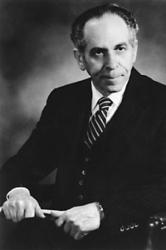
Izyaslav Lapin
 Russia
- Dr. Igor Petrovich Lapin: A Pioneer in Psychopharmacology
- Scientific Contributions and Leadership
- Serotonin and Psychoactive Drugs
- Neuroactivity of Kynurenines
- Other Research Directions
- International Collaborations and Honors
- Awards and Recognition
- Later Years and Legacy
Dr. Igor Petrovich Lapin: A Pioneer in Psychopharmacology
Early Life and EducationDr. Igor Petrovich Lapin was born in the besieged city of Leningrad (now St. Petersburg), Russia, during World War II. He graduated with honors from the 1st Leningrad Medical Institute (now Pavlov First St. Petersburg State Medical University) in 1953. Subsequently, he pursued postgraduate studies at the Leningrad Pediatric Medical Institute under the guidance of renowned pharmacologist Professor V.M. Karasik and the esteemed physiologist Professor L.A. Orbeli.
Scientific Contributions and Leadership
Laboratory of Psychopharmacology (1960-1993)Dr. Lapin established and led the Laboratory of Psychopharmacology at the Bekhterev Psychoneurological Research Institute in Leningrad from 1960 to 1993. Under his direction, the laboratory became a leading center for the experimental investigation of antidepressants. Dr. Lapin's team developed groundbreaking techniques for assessing the antidepressant activity of tricyclic compounds.
Serotonin and Psychoactive Drugs
Dr. Lapin's seminal work on the role of serotonin in the actions of psychoactive drugs, particularly antidepressants and antimanic agents, received international acclaim. His publications established the importance of serotonin in the treatment of mood disorders.
Neuroactivity of Kynurenines
In the 1970s, Dr. Lapin pioneered research on the neuroactivity of kynurenines, endogenous metabolites of the amino acid tryptophan. His work in this area gained international recognition and became a cornerstone of modern psychopharmacology.
Other Research Directions
Dr. Lapin pursued several other research directions, including the pharmacological effects of gamma-aminobutyric acid (GABA) and its derivatives, leading to the development of the widely used anxiolytic agent phenibut. He also collaborated with psychologists and psychiatrists to study the control of psychoactive drug effects in clinical practice.
International Collaborations and Honors
In 1990-1993, Dr. Lapin worked as a Visiting Scientist at the National Institutes of Health in the United States, continuing his research on kynurenines and behavior. Throughout his career, he lectured extensively on psychopharmacology in Russia, Italy, Germany, Israel, and the United States.
Awards and Recognition
Dr. Lapin received numerous prestigious awards and honors for his contributions to the field. These included membership in the New York Academy of Sciences (1971), the International Society of Biological Psychiatry (1971), the Academy of Science and Arts of the United States (1978), and the British Association for Psychopharmacology (1984). He was also awarded the commemorative medal of N.P. Kravkov for contributions to pharmacology in the USSR (1974).
Later Years and Legacy
At the time of his death, Dr. Lapin held the position of Chief Scientist at the V.M. Bekhterev Psychoneurological Research Institute in St. Petersburg. His legacy as a pioneer in psychopharmacology continues to inspire and shape the field today.