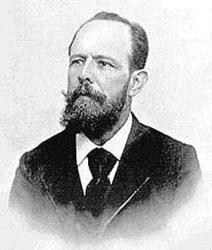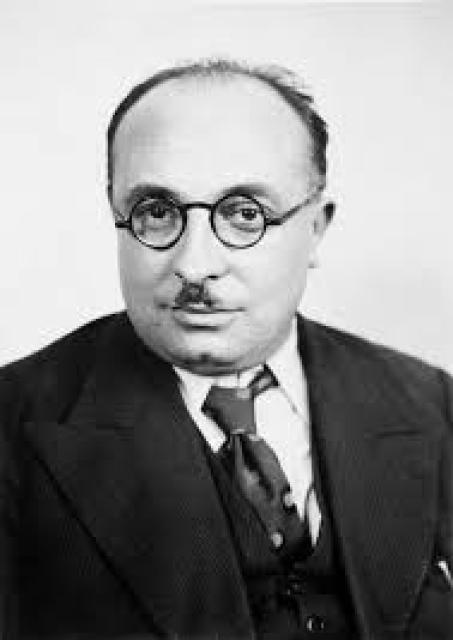
Jacques Duclos
 France
Biography of Jacques Duclos
Jacques Duclos was a French political figure, leader of the French Communist Party, and the associate and de facto successor of Maurice Thorez (although he was not formally the party's general secretary). He participated in the First World War, fought in the Battle of Verdun, and was wounded and taken as a prisoner by the Germans. He was an activist in the trade union movement and served as the general secretary of the Confectioners' Union from 1925 to 1929. Duclos became a member of the French Communist Party in 1920 and a member of the Central Committee in 1926. He joined the Political Bureau of the Central Committee of the French Communist Party in 1931 and served as its secretary from 1931 to 1964.
In 1926, Duclos was elected to the French National Assembly, defeating Paul Reynaud. He served as a deputy from 1926 to 1932, 1936 to 1939, and 1945 to 1958. From 1936 to 1938, he was the vice-president of the Chamber of Deputies. Starting from 1936, Duclos became the leading ideologist of the party and a staunch supporter of Stalin's line. He actively participated in the Comintern and Cominform. During the Spanish Civil War, Duclos served as an ideological consultant to the Republicans. He was also one of the leaders of the Resistance Movement, coordinating the underground activities of the French Communist Party during the occupation.
In 1945-1946, Duclos served as the vice-president of the Constituent Assembly. He assumed leadership positions in the party following Maurice Thorez's deteriorating health around 1950. From 1950 to 1953, he served as the acting general secretary of the Central Committee of the French Communist Party while Thorez was undergoing medical treatment in the Soviet Union. In 1959, Duclos became a senator and the leader of the Communist Party faction in the Senate. In the 1960s, he actively criticized the economic and social program of Gaullism. He had a negative attitude towards the "leftists" movement and the extremes of the student protests in May 1968, though he supported the general strike. Duclos opposed collaboration with anarchists, viewing them as representatives of petite bourgeois psychology, hiding behind ideas of "individual freedom in the struggle against the state and capitalism."
In the 1969 presidential elections, Duclos ran as a candidate and finished third after Georges Pompidou and Alain Poher, receiving 21.3% of the votes. He was awarded the Order of Lenin (1971) and the Gold Medal of Karl Marx from the Academy of Sciences of the USSR (1975). Some of Duclos' major works and memoirs were translated into Russian during his lifetime. A street in Saint Petersburg is named after him. He is buried in the Pere-Lachaise Cemetery in Paris, next to Maurice Thorez.