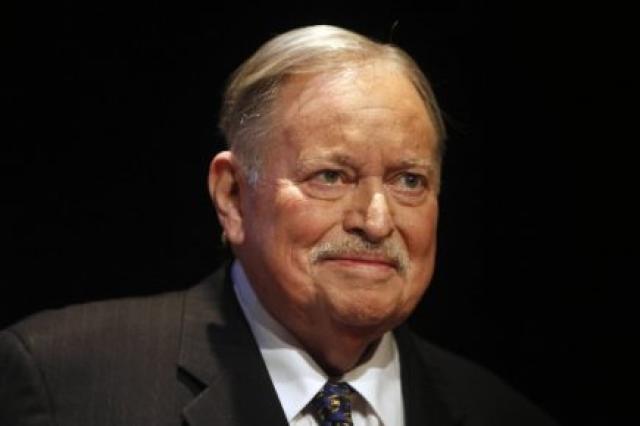
Jacques Parizeau
 Canada
- Jacques Parizeau: A Life Devoted to Quebec
- Economic Advisor and Architect of the "Quiet Revolution"
- Political Activism and the Path to Sovereignty
- Controversial Legacy: Language Policy and Economic Reforms
- Break with Lévesque and Rise to Political Leadership
- Premiership and Resignation
- Post-Political Career and Legacy
Jacques Parizeau: A Life Devoted to Quebec
Early Life and CareerJacques Parizeau was born on August 9, 1930, in Montreal, Quebec. His formative years were spent at the private Catholic school, Collège Stanislas. He pursued his doctorate at the London School of Economics, immersing himself in Keynesian economics.
Economic Advisor and Architect of the "Quiet Revolution"
In the 1960s, Parizeau became a key economic advisor to Quebec's provincial government. His expertise proved invaluable in the nationalization of Hydro-Québec and Asbestos Corporation Limited. He also played a crucial role in establishing the Quebec Pension Plan with Eric Kierans.
Political Activism and the Path to Sovereignty
As a supporter of Quebec sovereignty, Parizeau joined the Parti Québécois (PQ) in 1969. When the PQ came to power in 1976, Premier René Lévesque appointed him as Minister of Finance. Parizeau's influence was evident in the Quebec Referendum of 1980, where he championed provincial independence.
Controversial Legacy: Language Policy and Economic Reforms
Parizeau implemented innovative economic measures, such as the Quebec Stock Savings Plan. However, his support for the Charter of the French Language, which promoted the dominance of French in Quebec, alienated English-speakers and sparked a wave of emigration.
Break with Lévesque and Rise to Political Leadership
In 1984, Parizeau clashed with Lévesque over his willingness to negotiate with the federal government. He resigned from the cabinet and temporarily withdrew from Quebec politics. After Lévesque's resignation, Parizeau became PQ leader in 1988.
Premiership and Resignation
Parizeau led the PQ to victory in 1994 and became Quebec's 26th premier. His tenure was marred by controversy. In 1996, he made offensive remarks that were widely perceived as intoxicated and resigned the next day. Lucien Bouchard succeeded him as premier.
Post-Political Career and Legacy
In retirement, Parizeau remained a vocal critic of the Bouchard government and its perceived inaction on sovereignty. He owned a vineyard in France, a farm in Quebec's Eastern Townships, and a home in Montreal. His second wife, Lisette Lapointe, is a former National Assembly member for Crémazie. Parizeau's legacy remains complex and controversial, reflecting his unwavering belief in Quebec's future as an independent nation.


