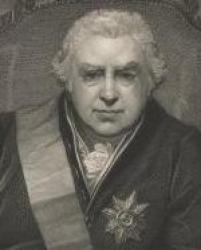
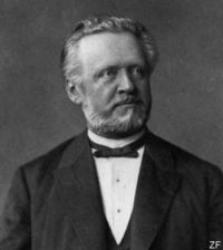
Jahn Lamark
 France
Biography of Jean-Baptiste Lamarck
Jean-Baptiste de Monet, chevalier de Lamarck, was born on August 1, 1744, in a small village in France. He was the eleventh child in a financially struggling aristocratic family. His parents had intended for him to become a priest, and he was enrolled in a Jesuit school. However, after his father's death, sixteen-year-old Lamarck left school and joined the army as a volunteer in 1761. He displayed great bravery and was promoted to the rank of officer. After the war, Lamarck came to Paris, but a neck injury forced him to leave the military. He decided to pursue medicine and became interested in natural sciences, particularly botany. While receiving a small pension, he worked at a banking house to earn extra income. After several years of intense study, the diligent and talented young scientist wrote a three-volume work called "Flora of France," which was published in 1778. The book described numerous plants and provided guidance for their identification. This publication brought Lamarck recognition, and the following year, he was elected as a member of the Paris Academy of Sciences. In the Academy, he continued his successful work in botany and gained considerable authority in the field. In 1781, he was appointed as the chief botanist for the French king.
Transition to Zoology
Lamarck's other passion was meteorology. From 1799 to 1810, he published eleven volumes dedicated to this science. He also studied physics and chemistry. In 1793, when Lamarck was nearly fifty, his scientific career took a turn. The Royal Botanical Garden where he worked was transformed into the Museum of Natural History. As there were no vacant botany chairs in the museum, he was offered the opportunity to work in the field of zoology. It was difficult for the elderly man to leave his previous work and switch to a new field, but his tremendous work ethic and genius overcame the obstacles. Within ten years, he became as knowledgeable in zoology as he was in botany.
The Theory of Evolution
As Lamarck approached old age, he had acquired extensive knowledge about animals and plants, surpassing the scientific understanding of his time. He decided to write a book that would not simply describe individual organisms but would explain the laws of development in living nature. Lamarck aimed to show how animals and plants came into existence, how they changed and developed over time, and how they reached their current state. In scientific terms, he wanted to demonstrate that animals and plants were not created as they are, but rather evolved through natural laws, thus presenting the concept of organic evolution. It was a challenging task, as few scientists before Lamarck had speculated about the mutability of species, but only he, with his immense knowledge, managed to solve this problem. Therefore, Lamarck is rightfully considered the creator of the first evolutionary theory, predating Darwin.
Lamarck published his book, "Philosophie Zoologique," in 1809, although it discusses not only animals but all living nature. Not all those interested in science at the time rejoiced in this book or understood the great task that Lamarck had set for scientists. In the history of science, it often happened that great ideas remained misunderstood by contemporaries and only gained recognition many years later. This was the case with Lamarck's ideas. Some scientists ignored his book entirely, while others ridiculed it. Napoleon, to whom Lamarck dared to present his work, reacted so harshly that Lamarck could not help but shed tears.
Legacy and Recognition
Towards the end of his life, Lamarck went blind and, forgotten by all, died on December 18, 1829, at the age of eighty-five. His only daughter, Cornelia, remained by his side and cared for him until his death, transcribing his dictations.
The words of Cornelia, immortalized on Lamarck's monument, proved to be prophetic: posterity truly appreciated Lamarck's work and recognized him as a great scientist. However, this recognition did not come quickly. It was only many years after Lamarck's death, after the remarkable work "On the Origin of Species" by Darwin was published in 1859, that people remembered and acknowledged their forgotten predecessor.
Although many aspects of Lamarck's theory are outdated from the perspective of modern biology, his main contribution lies in being the first, half a century before Darwin, to propose a theory of the natural origin and development of organic life.
Lamarck's ideas about the influence of the environment on organisms are not only significant for the history of biology but also have practical implications. Nowadays, people manipulate the properties of plants and animals through environmental influences.