Joseph Banks
 Great Britain
Biography of Joseph Banks
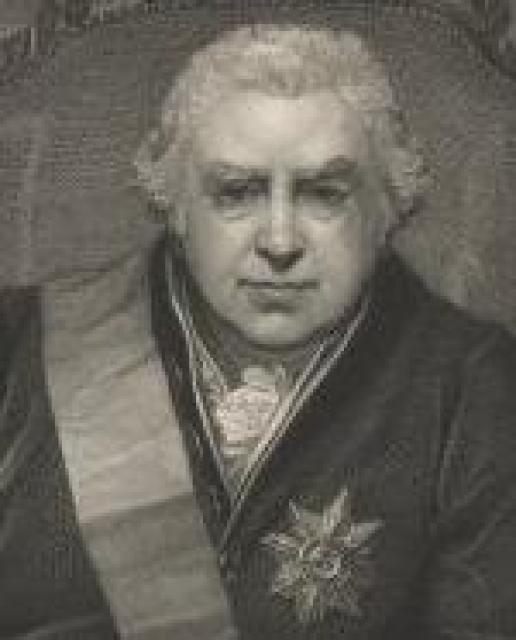
Joseph Banks was an English explorer, naturalist, botanist, and patron of the natural sciences. He was born in London to wealthy Lincolnshire squire William Banks and his wife Sarah. From a young age, Joseph was fascinated by botany and history. He attended Harrow School and Eton College, where he developed a deep interest in natural history.
In 1763, Banks left Oxford University and moved to Chelsea. Although he continued to attend the university until 1764, he did not receive a formal degree. In 1761, his father passed away, leaving Joseph a substantial estate in Lincolnshire. While managing his estate, Banks continued his scientific pursuits and had the opportunity to meet several prominent scientists of his time, including Carl Linnaeus.
Banks' influence grew within aristocratic circles, and he became an advisor to King George III. He actively supported various expeditions to unexplored parts of the world. In 1766, he became a member of the Royal Society and embarked on a productive journey to Newfoundland and Labrador with Constantine John Phipps. The scientific classification of the plants and animals they encountered further enhanced Banks' reputation among scientists.
In 1768, Banks joined Captain James Cook's first expedition. They traveled to Brazil, where Banks described the bougainvillea, a commonly seen garden plant today. The expedition then proceeded to Tahiti, New Zealand, and Australia. Banks returned to England as a legend in the scientific community.
In 1772, Banks attempted to join Cook on another voyage but had to settle for a trip to the Isle of Wight, where he assembled an impressive collection of plants. In March 1779, he married Dorothea Hugesson and settled in Soho, London. He resided in the house at 32 Soho Square until his death. Banks was made a baronet in 1781 and served as an unofficial advisor to King George III.
Banks was particularly interested in the exploration of Australia and played a significant role in organizing the British mission to the Chinese Imperial court with George Staunton. In the early 19th century, Banks faced health issues, particularly suffering from gout. He passed away on June 19, 1820, leaving behind a remarkable legacy as a great explorer and scientist.