Jake Lloyd
- Childhood and Early Roles
- The Phantom Menace and Sudden Fame
- Health, Family and Treatment
- Public Image and Recent Life
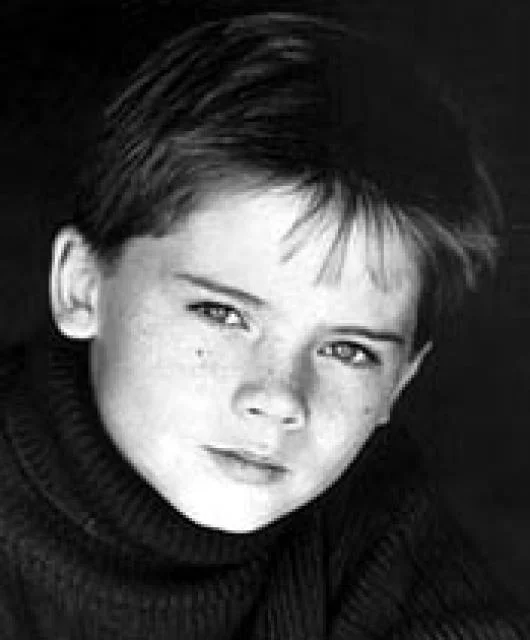
Jake Lloyd became internationally recognizable before he was ten, playing the young Anakin Skywalker in Star Wars: Episode I – The Phantom Menace. The role made him a face of one of cinema’s most anticipated franchises, but it was also the last major part of a short acting career. In later years, Lloyd’s life unfolded largely away from Hollywood as he dealt with schizophrenia and received treatment. His story is best understood through both the extraordinary speed of his childhood fame and the family’s careful, public efforts to correct rumors about what followed.
Childhood and Early Roles
Jake Matthew Lloyd was born on March 5, 1989, in Fort Collins, Colorado. He began acting as a child, appearing on television and in commercials. In 1996, he made his feature-film debut in Unhook the Stars, playing the son of Marisa Tomei’s character. That same year he appeared in the television drama ER and starred with Arnold Schwarzenegger in the Christmas comedy Jingle All the Way as Jamie Langston, a boy whose wish for a coveted action figure drives the story.
Lloyd continued to work in television, including appearances on The Pretender, and took roles in the television film Apollo 11 and other projects. He was still a young child when director George Lucas cast him as Anakin Skywalker, the gifted boy who would grow into Darth Vader. According to the account later given by his mother, he was selected from more than 3,000 children considered for the part.
The Phantom Menace and Sudden Fame
Released in 1999, The Phantom Menace placed Lloyd at the center of a major cultural event. As young Anakin, he played a gifted pilot and podracer discovered by Jedi Qui-Gon Jinn, years before the character’s transformation into the saga’s central villain. The part brought him global attention and a demanding promotional schedule while he was still a child.
The film’s reception was divided, and Lloyd later described experiencing teasing and bullying from classmates connected to his role. In a 2015 interview, he recalled other children making lightsaber sounds when they saw him and said the attention helped turn him away from acting. His mother, Lisa Lloyd, later offered a different emphasis: in a 2024 interview, she said he had been largely shielded from online criticism when the film came out and that family upheaval and a divorce contributed more directly to his decision to stop auditioning. The two accounts underline how complicated it is to reduce his childhood experience to a single cause.
Lloyd received the Young Artist Award for his performance and was nominated for a Saturn Award. He also voiced Anakin in several Star Wars video games. After his early screen success, he appeared in the racing drama Madison, filmed earlier and released in 2005. He then stepped away from professional acting.
Health, Family and Treatment
Lloyd’s mother has said that concerns about his mental health became apparent during high school, when he struggled with school and described experiences that worried his family. After leaving Columbia College Chicago in 2008, he underwent psychiatric assessments and was diagnosed with paranoid schizophrenia, a diagnosis now generally referred to as schizophrenia. His family has described the illness as a long-term challenge involving treatment and medication. Those details came from relatives speaking publicly about his situation; Lloyd has also since spoken for himself about accepting continued care.
In 2015, Lloyd was arrested in South Carolina after a police pursuit during a road trip. He faced multiple charges and spent about ten months in custody. His mother later said the family struggled to secure medical care while he was jailed and that he was eventually transferred to a hospital for treatment. The episode became a deeply difficult period in a life already affected by serious illness.
A further loss came in 2018, when his younger sister, Madison, died unexpectedly at age 26. She had appeared as an extra in The Phantom Menace. Lisa Lloyd said the death was devastating for her son, who found it difficult to process his grief.
In March 2023, Lloyd experienced what his mother described as a severe psychotic break. He was taken to hospital and later entered an inpatient mental-health rehabilitation program. In 2024, his mother reported that treatment was helping him reconnect with family and become more social. By January 2025, Lloyd had completed an 18-month inpatient stay and continued care at a rehabilitation center that allowed him greater freedom. In an interview with journalist Clayton Sandell, he said he felt “pretty good” and could accept treatment, therapy and medication. He also described fan support and memories of making the film as positive parts of his experience.
Public Image and Recent Life
For years, public discussion of Lloyd often blurred the distinction between a famous role, reports about his health and speculation about his feelings toward Star Wars. His mother has explicitly rejected the claim that he hates the franchise or that its reception caused his illness. She has said he remained a fan and enjoyed newer Star Wars stories. Lloyd’s own comments in 2025 were consistent with that account: he recalled the film fondly and said interactions with fans could be therapeutic.
In October 2026, Lloyd made a rare brief video appearance with fellow Star Wars child actor Daniel Logan, who played young Boba Fett. The two thanked fans for their support. The moment was modest, but it showed Lloyd returning to the public conversation on his own terms, with the franchise that brought him fame now also connecting him to a community offering encouragement.
Lloyd’s public legacy remains closely tied to one landmark role, yet his life cannot be reduced to a single film or to the speculation that followed it. His early performance helped introduce a new generation of viewers to Anakin Skywalker. His more recent openness about treatment, alongside his family’s advocacy, has shifted attention toward the realities of living with serious mental illness and the importance of support beyond celebrity headlines.