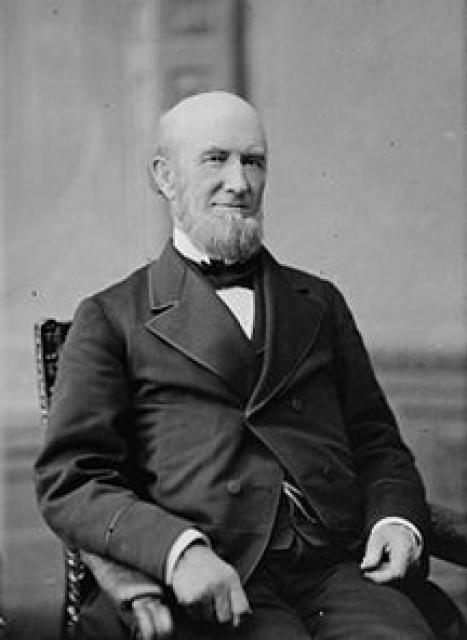
James Buchanen Eads
 USA
USA- James Buchanan Eads: American Civil Engineer and Inventor
- Early Life and Education
- Riverboat Engineering
- Civil War and Naval Contributions
- The Eads Bridge
- River Navigation and Dam Construction
- Later Projects and Legacy
James Buchanan Eads: American Civil Engineer and Inventor
James Buchanan Eads, an American civil engineer and inventor, was renowned for his remarkable contributions to bridge construction and river navigation.
Early Life and Education
Born in Lawrenceburg, Indiana, Eads was named after his mother's cousin, James Buchanan, a Pennsylvania congressman who later became the 15th U.S. President. His father's business ventures led to frequent relocations, resulting in limited formal education for young James. However, he found solace in the library of his first employer, a textile merchant, where he gained knowledge and skills.
Riverboat Engineering
At the age of 18, Eads became a purser on a Mississippi River steamboat, where he witnessed the frequent sinking of vessels. Inspired, he invented a "submarine" at age 22—a boat from which he could dive in a diving bell and recover valuables from the riverbed, amassing his initial fortune. He became known as "Captain Eads" due to his command of these salvage operations.
Civil War and Naval Contributions
With the onset of the U.S. Civil War in 1861, Eads was consulted by Edward Bates in Washington on river defenses. He later played a role in building "City-class" ironclads for the U.S. Navy, which saw action on western rivers.
The Eads Bridge
In 1867, Eads won the contract to build a railroad bridge across the Mississippi River in St. Louis. This bridge, completed in 1874, became the world's first major steel bridge and the longest arch bridge. Eads implemented innovative techniques such as cantilever construction to avoid obstructing waterways and the use of caissons for pier foundations. His approach influenced the construction of the Forth Bridge in Scotland by engineers John Fowler and Benjamin Baker.
River Navigation and Dam Construction
Eads also devised a plan to ensure year-round navigation from New Orleans to the Gulf of Mexico using jetties. These structures narrowed the river channel, preventing siltation. The system was installed in 1876, and the channel was cleared in February 1877.
Later Projects and Legacy
Eads proposed a massive railway across the Isthmus of Tehuantepec to transport ocean-going vessels between the Gulf of Mexico and the Pacific Ocean, though this project was never realized. He passed away at age 66 in Nassau and was buried in Bellefontaine Cemetery in St. Louis. Port Eads, Louisiana, was named in his honor.


