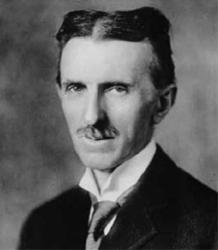
James Franck
 USA
- Education and early research
- Emigration and academic career
- Manhattan Project and the Franck Report
- Legacy
James Franck (August 26, 1882–May 21, 1964) was a German-born physicist who became a leading figure in American science. He shared the 1925 Nobel Prize in Physics with Gustav Hertz for their research on how electrons interact with atoms. Later, while working on the Manhattan Project, Franck chaired a group of scientists who urged the U.S. government to demonstrate the atomic bomb before using it against a city.
Education and early research
Franck was born in Hamburg, Germany. He studied chemistry and physics at the universities of Heidelberg and Berlin, earning his doctorate in 1906. He joined the University of Berlin and, in 1918, became a professor at the University of Göttingen, where he built a prominent research group.
In experiments conducted with Hertz between 1912 and 1914, Franck showed that electrons transfer energy to atoms in discrete amounts. Their results supported the emerging quantum theory of atomic structure. The work earned them the Nobel Prize in Physics for 1925, awarded in 1926.
Emigration and academic career
Franck resigned from his position at Göttingen in 1933, following the Nazi regime’s rise to power and discriminatory measures against Jewish academics. He moved first to Niels Bohr’s institute in Copenhagen and then to the United States. After a period at Johns Hopkins University, he joined the University of Chicago in 1938 as professor of physical chemistry. His later research included studies of photosynthesis.
Manhattan Project and the Franck Report
During the Second World War, Franck directed the Chemistry Division of the Metallurgical Laboratory at the University of Chicago, part of the Manhattan Project. As the atomic bomb neared completion, he chaired a committee of scientists that wrote the 1945 Franck Report. The report argued against using the bomb without warning on a populated target and proposed a public demonstration. It also warned that such a use could undermine international efforts to control nuclear weapons.
The government did not adopt the committee’s central recommendation, but the report became an influential statement about scientists’ responsibility for the consequences of their work.
Legacy
Franck remained associated with the University of Chicago after the war and continued to take part in scientific research and discussion. He received the Max Planck Medal and other honors in addition to the Nobel Prize. His legacy joins foundational work in atomic physics with a prominent example of scientists speaking publicly about the ethical and political consequences of their research.