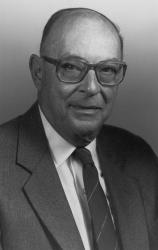
Max Born
 Germany
- Max Born: A Pioneer in Quantum Mechanics
- Contributions to Physics
- Collaboration and Recognition
- Exile and Later Career
- Later Years and Legacy
Max Born: A Pioneer in Quantum Mechanics
Early Life and EducationMax Born was born in Breslau (now Wroclaw, Poland) on December 11, 1882. He pursued mathematics and physics at the University of Breslau before transferring to the University of Göttingen in 1904. There, he studied under David Hilbert, Felix Klein, and Hermann Minkowski.
Contributions to Physics
In 1907, Born earned his doctorate with a dissertation on the stability theory of elastic bodies. His groundbreaking work on the electron's mass combined Einstein's theories of relativity with Minkowski's mathematics. In 1925, he formalized Werner Heisenberg's ideas on quantum mechanics, coining the term itself.
Collaboration and Recognition
Born became a close friend of Albert Einstein. With Fritz Haber, he developed the Born-Haber cycle, a technique for analyzing thermochemical processes. In 1932, he was elected Dean of the Science Faculty at the University of Göttingen.
Exile and Later Career
After the Nazi rise to power, Born was forced to flee Germany. He lectured at Cambridge and, later, became Professor of Natural Philosophy at the University of Edinburgh (1936-1953). His contributions to quantum mechanics earned him the Nobel Prize in Physics in 1954.
Later Years and Legacy
After his retirement, Born settled near Göttingen. He actively campaigned against nuclear weapons and became a founding member of the Pugwash Conferences on Science and World Affairs. Born passed away on January 5, 1970, in Göttingen. His legacy as a pioneering physicist continues to inspire generations of scientists.