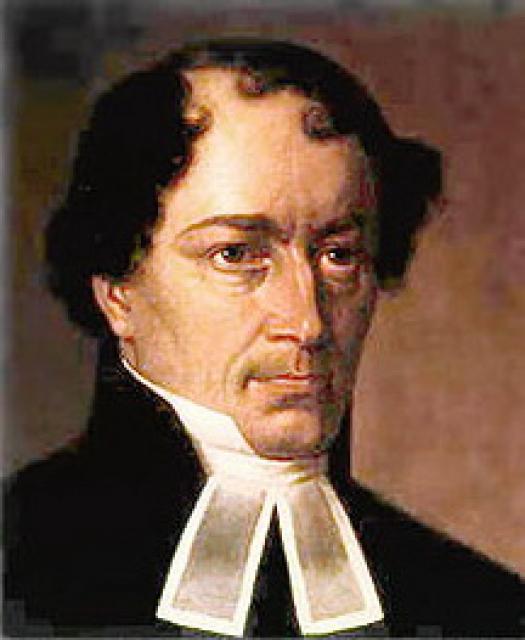
Jan Kollar
 Slovakia
- Jan Kollár: Father of Pan-Slavism
- German Influences and National Awakening
- Literary and Ideological Contributions
- Role in the Slovak National Revival
- Literary and Scholarly Legacy
Jan Kollár: Father of Pan-Slavism
Early Life and EducationJan Kollár, born on July 29, 1793, was a Slovak politician, poet, philosopher, and Lutheran priest who played a pivotal role in the development of Pan-Slavism. The eldest son of a poor scribe in Mošovce, Kollár's path was initially designated toward a trade in the butcher's craft. However, his desire for higher education led him to leave home at an early age and pursue his studies with the support of patrons.
He attended grammar schools in Kremnica and Banská Bystrica, before enrolling in the Evangelical Lutheran Lyceum in Pressburg (Bratislava) in 1812-1815. During this time, he forged a lifelong friendship with František Palacký, a renowned historian and another key figure in the Pan-Slavic movement.
German Influences and National Awakening
In 1816, Kollár traveled to Jena, Germany, where he spent the next three years studying theology at the University of Jena. The vibrant atmosphere of German nationalistic sentiment, sparked by the struggle against Napoleon, left a profound impression on Kollár.
Inspired by the glorification of German culture on land formerly inhabited by Slavic tribes, Kollár became deeply aware of the consequences of Slavic disunity. This awakening further intensified after his encounter with Mina Schmidt, a woman of German ancestry who became the muse for his poetic works.
Literary and Ideological Contributions
Upon returning to Hungary in 1819, Kollár became a preacher at the Evangelical Church in Pest. His literary career began in 1821 with the publication of "Básně Jana Kollára," a collection of 76 sonnets expressing his love for Mina and echoing the style of Petrarch's sonnets to Laura.
In 1824, Kollár published his influential work "Slávy Dcera" ("The Daughter of Slava"), which comprised 150 sonnets in three parts. The poem extolled the glories of Slavic history and culture, envisioning a united Slavic nation.
Over the years, "Slávy Dcera" grew to encompass more than 600 sonnets in five parts. It became a symbol of Pan-Slavism, with Kollár's lyrical outpourings inspiring generations of Slavic nationalists.
Role in the Slovak National Revival
Despite his advocacy for Pan-Slavism, Kollár also worked to promote Slovak identity within the Austro-Hungarian Empire. He campaigned for the establishment of Slovak schools and churches, and secured the use of Slovak language in religious services.
Kollár's support for Slovak rights brought him into conflict with Hungarian nationalists, who sought to suppress Slovak culture. Faced with persecution and imprisonment, Kollár eventually relocated to Vienna, where he continued his intellectual and political activities.
Literary and Scholarly Legacy
In addition to his poetic contributions, Kollár also wrote extensively on Slavic philology, history, and mythology. His works include "Rozpravy o jménach, počátcích a starožitnostech národu slovanského" ("Discourses on the Names, Origins, and Antiquities of the Slavic Nation"), "Výklad k Slávy Dcera" ("Commentary on The Daughter of Slava"), and "Staroitalia slavjanska" ("Slavic Old Italy").
Kollár's literary legacy remains significant within Slavic literature. His role in the development of Pan-Slavism and his advocacy for Slovak rights have earned him a place among the most influential figures of the 19th century.