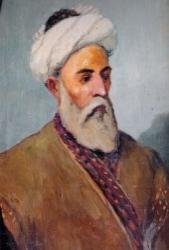
Jan Skacel
 Czech
CzechBiography of Jan Skácel
Jan Skácel was a Czech poet, prose writer, translator, and author of children's books. He was born into a teacher's family in Eastern Moravia, a region rich in folklore and songs, which remained a lifelong inspiration for him.
Skácel completed his secondary education in Brno in 1941 and then served as a ticket collector in a cinema. In 1942, he was sent by the German army to forced labor in Austria, where he dug tunnels and built roads.
After the war, Skácel graduated from the Faculty of Philosophy at Masaryk University in Brno. In 1948, he started working in the "Culture" section of the Brno magazine "Rovnost" and became friends with its editor, the poet Oldřich Mikulášek. In 1954, Skácel joined the literature department at Radio Brno, and in 1963, he co-founded the journal "Host do domu" ("Guest at Home") with Mikulášek. However, after the suppression of the Prague Spring in 1969, the journal was closed, and Skácel's works were banned, effectively cutting off his path to publication. He was sentenced to "internal exile" and lived in extreme poverty. Despite this, his poems were circulated in samizdat publications and were published and translated abroad. Skácel was elected a corresponding member of the Bavarian Academy of Fine Arts in Munich. Only after 1981 did Skácel return to public life, and his poems began to be published again, albeit with censorship restrictions and limited print runs. Unfortunately, he passed away a few days before the "Velvet Revolution."
Skácel's poetry is characterized by a close connection to Moravian folklore, religious poetry of Czech medieval tradition, extreme conciseness, and, at the same time, a maximum revelation of the semantic richness of the Czech and Moravian language. Milan Kundera, who found similarities between Skácel's depth of meaning and Heidegger's etymological investigations, confessed that it was Skácel's poetry that connected him to his native language. Skácel also translated the works of Plautus and Sophocles.
Skácel was the recipient of the Petrarch Prize (June 1989, Lucca, laudation by Peter Handke) and the International Vilenica Prize (autumn of the same year, Slovenia). His poems and micro-prose have been translated into English, French, German, Italian, Spanish, Polish, Slovenian, and Russian, with prominent European poets among his translators (F. Jacottet, P. Handke, R. Kunce).
His texts have been set to music by Petr Eben, a contemporary Czech composer, and Miloš Štědroň. The album "Solstice" by Jiří Pavlica and his ensemble of traditional instruments, featuring Skácel's poems, sold tens of thousands of copies in the Czech Republic and went through several editions. In 2002, Jan Skácel was awarded the honorary citizenship of Brno.