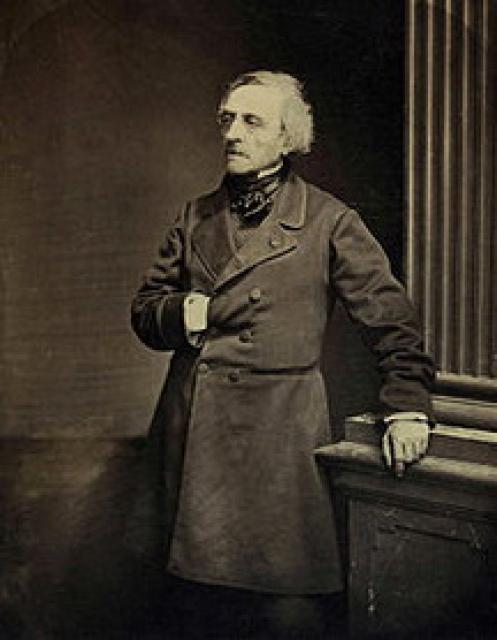
Jean-Jacques Ampere
 France
- Jean-Jacques Ampère: A Pioneering French Philologist
- Early Life and Education
- Literary Career
- Academic Achievements
- Travels and Literary Contributions
- Legacy of Scholarship
Jean-Jacques Ampère: A Pioneering French Philologist
Jean-Jacques Ampère was a renowned French philologist and member of the prestigious Académie Française.
Early Life and Education
Born as the only son of the noted physicist André-Marie Ampère, Ampère received his education in Paris. His thirst for knowledge led him to embark on extensive travels throughout Europe, including Italy, Germany, and Scandinavia, where he immersed himself in the study of folk songs and poetry.
Literary Career
Upon returning to France in 1829, Ampère delivered public lectures on literary history in Marseille. In 1830, he published a groundbreaking anthology of Scandinavian and Germanic poetry, introducing these literary traditions to French readers.
Academic Achievements
Ampère relocated to Paris, where he taught at the Sorbonne and became a professor of French literature at the Collège de France. He also held the position of curator of the Mazarine Library. In recognition of his contributions to literature, he was elected to the Académie Française des inscriptions et belles-lettres (1842) and the prestigious Académie Française (1848).
Travels and Literary Contributions
Inspired by his travels, Ampère visited North Africa, Greece, and Italy in 1841. His experiences during this journey culminated in the publication of "Grèce, Rome et Dante" (1848), which sparked a renewed interest in Dante's work in France. Ampère's travels also included a visit to America in 1851.
Legacy of Scholarship
Throughout his life, Ampère dedicated himself to writing scholarly works. His magnum opus, "L'Histoire romaine à Rome," remains a monumental contribution to Roman history. He also published a collection of his poems. Ampère's writings are characterized by their astute critical judgment, vast erudition, and clear, engaging prose.



