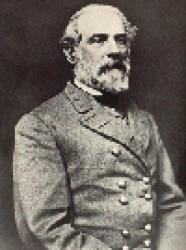
Jean Marie Lattre de Tassigny
 France
- Early Life and Military Education
- World War I
- Interwar Period
- World War II
- Liberation and Post-War Career
Early Life and Military Education
Jacques Philippe Leclerc de Hauteclocque was born on November 22, 1902, in Belloy-Saint-Léonard, France. He attended Saint Joseph's College in Poitiers and later in Paris. In 1909, he entered the Saint-Cyr Military Academy, graduating fourth in his class. Prior to entering the academy, Leclerc served for a year as a private and brigadier in the 22nd Dragoon Regiment.
World War I
In 1911, Leclerc attended the Cavalry School in Saumur. He graduated and was commissioned as a second lieutenant in 1912, joining the 12th Dragoon Regiment. On August 11, 1914, he was wounded in the knee. A month later, during a reconnaissance mission, he sustained another wound, this time a spear thrust to the chest. From 1915 onward, Leclerc served in infantry units. As part of the 93rd Infantry Regiment, he fought in the battles of Verdun and Chemin des Dames, suffering three additional severe wounds. He ended World War I with the rank of captain, awarded the Officer's Cross of the Legion of Honour and the Croix de Guerre with eight citations.
Interwar Period
After the war, Leclerc served in Bordeaux and later in the 49th Infantry Regiment in Bayonne. In 1921, he volunteered to serve in Morocco. From 1921 to 1926, he served as chief of staff of the Taza region during the Rif Operation. Twice wounded during these operations, he received three citations and was exceptionally promoted to battalion commander. In 1927, Leclerc entered the École Supérieure de Guerre.
From 1929 to 1931, he served in the 5th Infantry Regiment in Colombier. He was then assigned to the Fourth Bureau of the General Staff of the Army, where he was promoted to colonel and served on the staff of General Maxime Weygand from 1932 to 1935. In 1935, he became commander of the 151st Infantry Regiment in Metz. The following year, he underwent training at the Centre des Hautes Études Militaires. Upon graduating, he was appointed chief of staff to the military governor of Strasbourg.
World War II
In 1939, Leclerc was promoted to brigadier general, becoming the youngest general in France. From September 2, 1939, he served as chief of staff of the Fifth Army. In January 1940, he took command of the 14th Infantry Division. During the German offensive in May 1940, his units repelled enemy advances three times, capturing two thousand prisoners.
After the armistice, Leclerc was appointed deputy commander of the 13th Military Region in Clermont-Ferrand. In September 1941, he became commander of Vichy French forces in Tunisia. He returned to France in January 1942 and was appointed commander of the 16th Division in Montpellier, receiving the rank of corps general. In November 1942, with the arrival of German troops in southern France, he ordered his troops to leave their garrisons and resist. Betrayed and arrested, he was interned in Toulouse and later transferred to Fort Montluc in Lyon.
Liberation and Post-War Career
Following Allied landings in North Africa, Leclerc escaped from prison and joined the Free French forces. He played a crucial role in the liberation of France, leading the 2nd Armored Division against German occupiers. After the war, Leclerc served as a general inspector of the army and was appointed marshal of France in 1952. He died in an airplane crash in Algeria on November 28, 1947.