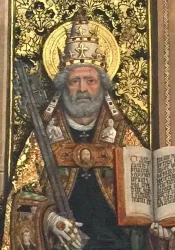
Jean-Marie Vianney
Jean-Marie Vianney, widely known as the Curé of Ars, was a French Catholic priest whose ministry in a small rural parish drew visitors from across France and beyond. Born near Lyon in 1786, he came of age during the upheaval of the French Revolution and overcame a difficult path through priestly training. His reputation for pastoral devotion and hearing confessions made Ars a major destination for pilgrims. The Catholic Church canonized him in 1925.
Childhood in revolutionary France
Vianney was born on 8 May 1786 in Dardilly, a village near Lyon, to a family of farmers. The French Revolution disrupted religious life in the region, and he received some early religious instruction in a setting where Catholic priests who refused the revolutionary oath had to minister discreetly. The experience formed part of his early understanding of faith and the church.
As a young man, he felt called to the priesthood, but his schooling had been limited. He struggled particularly with Latin and academic study, and his preparation was interrupted by the political turmoil of the period, including military conscription. With the support of the priest Abbé Balley, who tutored and encouraged him, Vianney continued his studies and was ordained in 1815.
The Curé of Ars
After serving as an assistant priest at Écully, Vianney was assigned to Ars in 1818. The village was small, and its parish became the focus of his life. He preached, visited parishioners, taught children, and encouraged religious practice. Accounts of his austere habits and long hours in the church became part of the portrait that drew people to Ars.
Vianney became especially known as a confessor. Visitors travelled to speak with him, and the demand for confession grew so great that he spent long stretches hearing penitents. His reputation spread through word of mouth and church networks, turning a modest village into a place of pilgrimage during his lifetime.
Ministry and reputation
The Curé’s approach emphasized repentance, prayer and participation in the sacraments. He also worked to support parish life and the education of local children. Stories about his discipline and spiritual insight circulated widely, though many details come from religious biographies written to present him as a model priest.
His fame rested less on public office or scholarship than on his personal presence and pastoral work. For Catholics who came to Ars, the parish priest represented an accessible spiritual guide in a period when France was rebuilding religious institutions after revolutionary upheaval.
Death and canonization
Vianney died in Ars on 4 August 1859. His reputation for holiness continued to grow after his death. Pope Pius X beatified him in 1905, and Pope Pius XI canonized him on 31 May 1925. In 1929, Pius XI named him patron of parish priests throughout the world.
Legacy
The Curé of Ars remains an influential model of parish ministry in Catholic life. His story is remembered for the unlikely path from a rural childhood and challenging studies to a priesthood shaped by service, simplicity and the confessional. Ars continues to welcome pilgrims drawn by his memory and by the religious tradition associated with his ministry.