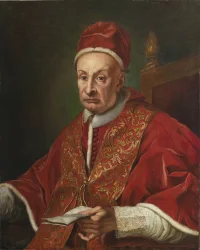
Benedict XIII
- A Dominican in the Orsini Family
- Election and Religious Priorities
- Government and Cardinal Coscia
- Final Years and Legacy
Pope Benedict XIII came to the papacy as a Dominican friar and long-serving archbishop, known for personal austerity and pastoral devotion. His pontificate, from 1724 to 1730, reflected those priorities in its religious ceremonies and church councils. Yet his confidence in trusted aides, especially Cardinal Niccolò Coscia, left the administration exposed to serious abuses.
A Dominican in the Orsini Family
Born Pietro Francesco Orsini on 2 February 1649 in Gravina, in the Kingdom of Naples, he belonged to the powerful Orsini family. At sixteen, during a visit to Venice, he entered the Dominican Order against his family’s wishes and took the religious name Vincenzo Maria. His choice turned him away from the secular privileges expected of a noble heir and toward a life of study and church service.
Orsini was made a cardinal in 1672 and served as bishop in several Italian dioceses. In 1686 he became archbishop of Benevento, a position he held for nearly four decades. He developed a reputation for close attention to pastoral work, visiting parishes and promoting religious instruction. The experience shaped his image as a conscientious church leader rather than a court politician.
Election and Religious Priorities
After the death of Pope Innocent XIII, the cardinals elected Orsini on 29 May 1724. He first chose the name Benedict XIV, then changed it to Benedict XIII to avoid confusion with a rival claimant from the Western Schism. His election followed a lengthy conclave in which the leading European powers could not secure their preferred candidates.
Benedict continued to live simply and emphasized religious observance. In 1725 he celebrated a Jubilee year in Rome, drawing pilgrims to the city. He also convened church councils and supported missionary work. His papacy confronted the continuing controversy over Jansenism, a movement that emphasized human sinfulness and divine grace. Benedict confirmed the authority of Pope Clement XI’s 1713 bull Unigenitus, which condemned propositions associated with Jansenist theology.
Government and Cardinal Coscia
Benedict’s strengths as a pastor did not translate easily into control of the complex Papal States and Roman administration. He relied heavily on officials he had known in Benevento, among them Niccolò Coscia, his former secretary. Coscia rose to cardinal and acquired substantial influence over church and financial affairs. His conduct and that of other officials drew accusations of corruption and extortion, damaging the pope’s reputation.
Benedict’s trust in Coscia was widely regarded as a major weakness of the pontificate. After Benedict’s death, Coscia was prosecuted and convicted of financial crimes, then imprisoned before later being released. The scandal underscored how personal confidence and religious sincerity could not by themselves guarantee sound administration.
Final Years and Legacy
Benedict XIII died in Rome on 21 February 1730, aged eighty-one. His long record of service in Benevento and his austere personal life remain central to accounts of his character, while his papacy is remembered for the contrast between his pastoral devotion and the abuses committed by men he entrusted with power.