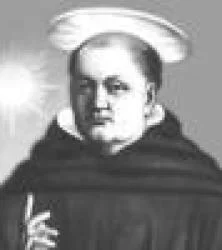
Francis Xavier
Francis Xavier carried the new Society of Jesus far beyond Europe, traveling through India, Southeast Asia, and Japan in a mission that made him one of the most celebrated Catholic missionaries of the sixteenth century. A gifted organizer and tireless correspondent, he worked in communities connected by Portuguese trade and imperial power. His journeys helped establish a lasting Jesuit presence in Asia, while also placing his life within the unequal political world of early European expansion.
From Navarre to Paris
Born Francisco de Jasso y Azpilicueta on April 7, 1506, he grew up at the family castle of Xavier in the Kingdom of Navarre, in what is now northern Spain. He studied at the University of Paris, where he met Ignatius of Loyola. At first Xavier sought an academic career, but his friendship with Ignatius and the spiritual exercises they practiced together changed his plans.
In 1534, Xavier and a small group of companions, including Ignatius, made vows of poverty and chastity and committed themselves to serving the Church. The group later became the Society of Jesus, or Jesuits, formally approved by Pope Paul III in 1540. Xavier was ordained a priest in 1537 and became one of the order’s original founding companions. His capacity for languages, administration, and personal connection made him well suited for overseas work.
A mission across the Indian Ocean
In 1541, at the request of Portugal’s King John III, Xavier sailed for the Portuguese trading center of Goa, arriving the following year. He preached among Portuguese settlers and local communities, organized instruction for new Christians, and traveled to coastal regions of India. He also visited Malacca and the Moluccas, moving through a network of ports shaped by Portuguese shipping and military power.
His work combined religious conviction with the realities of empire. Missionaries relied on ships, permissions, and protection provided by Portuguese authorities, whose presence was often coercive. Local communities were not passive: people interpreted Christianity through their own languages, beliefs, and political circumstances. Xavier’s letters, sent back to Europe, described his encounters and urged more priests to join the mission, helping to inspire generations of Jesuits to travel overseas.
In 1549, he began the first Jesuit mission in Japan, accompanied by fellow missionaries and a Japanese convert, Anjirō, who had met him in Malacca. Xavier learned about Japanese culture and sought audiences with local rulers, believing that Christian teaching could gain a hearing through respectful engagement and education. The mission made converts, though it faced linguistic barriers and depended on local alliances. Xavier spent more than two years in Japan before leaving with the hope of reaching China, which he regarded as central to the spread of Christianity in East Asia.
An unfinished journey and lasting influence
Xavier returned to Goa and then set out for China, but he was unable to enter the country. He died of fever on December 3, 1552, on Shangchuan Island off the Chinese coast, while waiting for passage to the mainland. He was 46. His body was later taken to Goa, where it became the focus of an enduring pilgrimage tradition.
The Jesuits preserved and circulated his letters, presenting him as a model missionary whose energy and courage carried faith across vast distances. He was canonized in 1622 alongside Ignatius of Loyola. The title “Apostle of the Indies” reflects his standing in Catholic history, but it also belongs to a wider story of European missions operating through colonial trade and power. Xavier’s legacy includes both the communities established through his work and the complex encounter between Christian evangelization and the societies it sought to change.