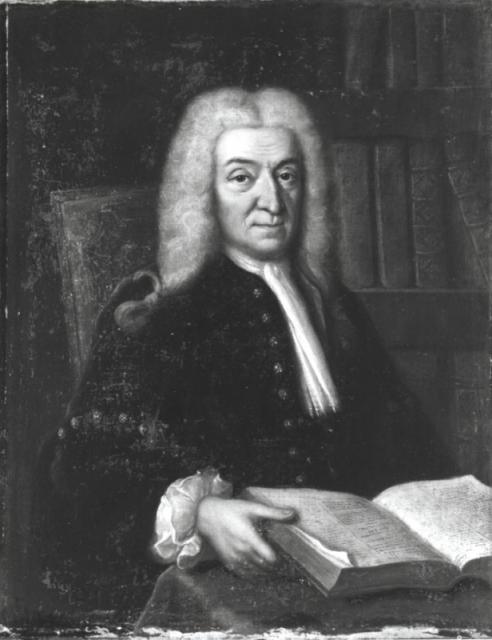
Jean-Pierre de Crousaz
 Switzerland
- Jean-Pierre de Crousaz: A Swiss Philosopher and Educator
- Professorial Career
- Groningen Years
- Royal Tutor and Final Years
- Literary Contributions
- - "Traité du beau" (1712)
Jean-Pierre de Crousaz: A Swiss Philosopher and Educator
Early Life and EducationJean-Pierre de Crousaz was born in Lausanne, Switzerland. He pursued a rigorous academic journey, studying at renowned universities in Geneva, Leiden, and Paris. Crousaz's education laid the foundation for his future contributions to philosophy and mathematics.
Professorial Career
In 1700, Crousaz returned to his hometown of Lausanne, assuming the prestigious professorship of philosophy and mathematics at the University of Lausanne. He served as rector of the university four times, demonstrating his academic leadership and influence.
Groningen Years
Seeking new intellectual challenges, Crousaz relocated to the Netherlands in 1724, becoming the head of the department of philosophy and mathematics at the University of Groningen. During this period, he actively participated in theological debates, engaging in discussions and controversies with theologians.
Royal Tutor and Final Years
In 1726, Crousaz was entrusted with the noble responsibility of tutoring the young Prince Frederick of Hesse-Kassel. He returned to Lausanne in 1735, where he was reinstated to his former chair at the University of Lausanne. Crousaz held this position until his passing, continuing to contribute to the field of philosophy until the end of his life.
Literary Contributions
Crousaz's philosophical legacy lives on through his numerous publications, including:
- "Traité du beau" (1712)
- "La logique" (1725)- "Examen du Pyrrhonisme" (1733)
- "De l'esprit humain" (1741)
These works covered topics such as metaphysics, epistemology, and the nature of beauty. Crousaz's writings were instrumental in shaping philosophical thought in the 18th century.



