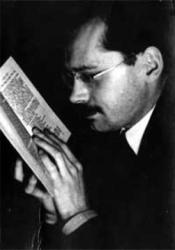
Julien Offroy de Lamettrie
 France
- Biography of Julien Offroy de La Mettrie
- Medical Career and Philosophical Ideas
- Radical Materialism and Controversial Works
- Ethical Views and Later Life
Biography of Julien Offroy de La Mettrie
Julien Offroy de La Mettrie (1709–1751) was a French philosopher and physician, known for his contributions to French materialism and atheism in the 18th century. He was born on December 25, 1709, in Saint-Malo. Initially, La Mettrie studied theology in Paris and seemed destined to become a Jansenist priest. However, his interest in medicine was sparked by a practicing physician in Saint-Malo, which led him to pursue the study of medicine in Leiden in 1733 under the renowned Herman Boerhaave, whose works he later translated into French.
Medical Career and Philosophical Ideas
After gaining recognition as a physician, La Mettrie secured a position as a surgeon in the Royal Guard in Paris. It was during a bout of illness, where he experienced feverish delirium, that he began contemplating the relationship between the soul and the body. He concluded that the soul is merely a function of the heart and brain. These ideas were published in his work "The Natural History of the Soul" (Histoire naturelle de l'âme, 1745), which drew criticism from both the Church and traditional medical practitioners. The book was publicly burned, leading La Mettrie to emigrate to the Netherlands, where his materialism took on a more radical form.
Radical Materialism and Controversial Works
In his work "Man a Machine" (L'Homme machine, 1747), also burned upon publication, La Mettrie argued that humans are nothing more than complex matter. He dismissed the concept of a disembodied soul, asserting that thoughts only arise when the body receives sensory impressions through its organs. He emphasized that animals also possess sensory organs, and human beings differ from animals only quantitatively in terms of greater sensitivity and intelligence. La Mettrie posited that the soul ceases to exist after the body's death.
Ethical Views and Later Life
La Mettrie's ethical views were presented in his work "Against Seneca, or Discourse on Happiness" (Anti-Senque, ou Discours sur bonheur, 1748). He argued that sensual pleasure is the purpose of life, and virtue is based solely on self-love. His posthumously published work, "The System of Epicurus" (Système d'Epicure, 1751), also expounded these ideas. La Mettrie's unorthodox beliefs stirred controversy, leading him to leave Leiden. In 1748, he obtained a position as a reader at the court of Frederick II in Berlin and became a member of the Berlin Academy of Sciences. La Mettrie passed away in Berlin on November 11, 1751.