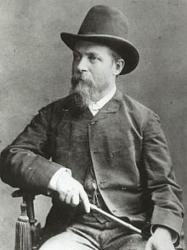
Jean Rigaud
 France
Biography of Jean Rigaud
Jean Rigaud was a French marine artist, who was awarded the title of Peintre de la Marine (painter of the Navy) by the French Minister of Defense in 1956. This title is given to painters, sculptors, photographers, engravers, and illustrators whose main theme of work revolves around the sea, sailors, and the navy.
Early Life and Education
Jean Rigaud was born on June 15, 1912, in Bordeaux, France, into a family of renowned post-impressionist artist Pierre-Gaston Rigaud (1874-1949). The French composer and organist Charles Tournemire acted as his godfather. In 1914, shortly after the outbreak of World War I, the Rigaud family moved to the village of Guyenne, where Jean received his first lessons in drawing under the guidance of his father, who was also a respected teacher. Even in his childhood, Jean developed his own style of painting, characterized by clean colors such as ochre, yellow, and cadmium red, which stood vividly against the gray background of the sky.
Artistic Career
In 1925, Jean Rigaud was invited to exhibit his works at the Salon of Ancient Spanish Art in Paris, and these exhibitions became regular for him. He continued his education at the National School of Fine Arts in Paris, studying in the studio of painter and illustrator André Devambez. During his time in Devambez's studio, Rigaud began to develop his unique impressionistic style and painting technique. It was during this period that he started to paint maritime scenes, for which he became renowned. However, this does not mean that he gave up on other themes. Rigaud also worked on landscapes, rural scenes, and houses. Examples of such works include 'Tolede: Contre Jour', 'L'Isle Adam', and 'Ker Guerin, Île d'Yeu'. However, according to his biographer, Rigaud left little room for accurately depicting human figures in his paintings.
In 1936, Rigaud married Andrée Caza, the sister of Basque artist André Caza, and he gave painting lessons in his Parisian studio. Rigaud's brother-in-law, André Caza, married Jean's sister, Geneviève Rigaud.
During World War II, Rigaud was taken as a prisoner of war and was held at Stalag VIIA in Moosburg, where he created numerous drawings. After the war, Rigaud, along with art historian Rose Valland, worked in the commission for the restitution of art looted by the Nazis.
Exhibitions and Recognition
From 1938 to 1976, Jean Rigaud participated in 53 solo exhibitions, including the Durand-Ruel Gallery, where he exhibited every two years from 1956 to 1974. Throughout his life, Rigaud held exhibitions of his works in all major salons in Paris, including the National Society of Fine Arts, Salon Comparaisons, Salon du Dessin et de la Peinture a l'eau, and Salon de la Marine. Rigaud also exhibited his works in Casablanca, New York, and Strasbourg. He received a gold medal at the International Exhibition in Paris in 1937, the "Messageries Maritimes" prize in 1952, and the Charles Cottet prize in 1957. Jean Rigaud's paintings are held in many private and public collections around the world. His works are part of the permanent exhibition at the National Museum of Modern Art in Paris, National Navy Museum, Niort Museum, Museum of Fine Arts in Tours, museums in Poitiers, Mulhouse, Chalet, Pontoise, and Strasbourg. Additionally, Rigaud's works are frequently mentioned in respected books on contemporary art.
In the 1950s, he lived in the commune of L'Île-d'Yeu, frequently traveled to Venice, and achieved great popularity in the United States.
Jean Rigaud passed away on February 7, 1999, in Paris. Immediately after his death, the National Navy Museum opened a retrospective exhibition of his works, which had been prepared during the artist's lifetime and was highly successful. Rigaud's place among the most significant French realists and impressionists was firmly established.