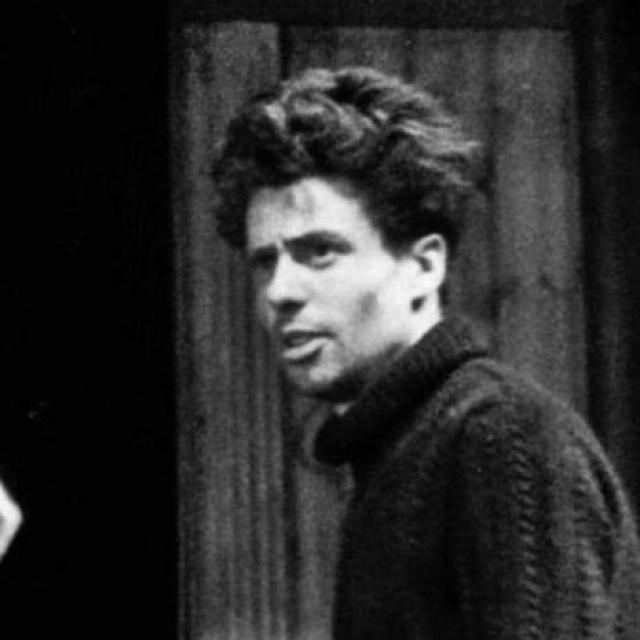
Jean Vigo
 France
Biography of Jean Vigo
Jean Vigo was a French film director who, despite his short life and brief career, made a significant contribution to the development of poetic realism in French cinema in the 1930s, which later influenced directors of the French New Wave. He was born in Paris on April 26, 1905. He was the son of militant anarchist Eugène Bonaventure de Vigo, whose pseudonym was Miguel Almereyda, an anagram of the French expression "this is shit" (y'a la merde), and his wife, Émilie Cléro. Vigo's father published a satirical newspaper called "Red Riding Hood", but was later accused of treason for supporting Germany and was imprisoned, where he was strangled under unclear circumstances on August 13, 1917.
Childhood and Education
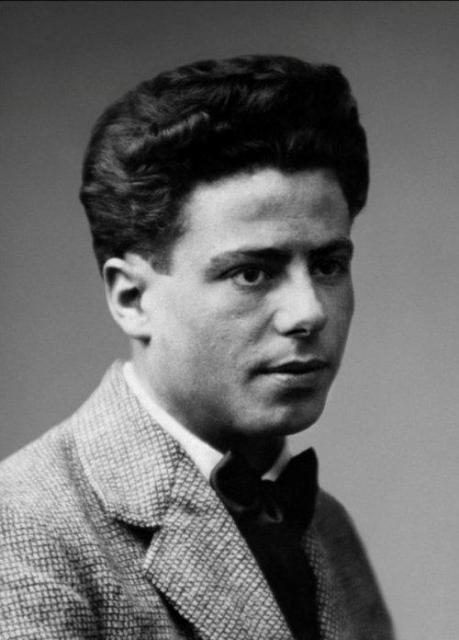
Due to his weak health from a young age, Vigo spent a long time in hospitals and sanatoriums. Since his parents were involved in politics, he was raised by family relatives and friends and studied in boarding schools under the fictional name Jean Sale. In 1922, at the age of seventeen, Vigo reunited with his mother, and in 1926, he briefly studied at the Sorbonne under his real name. On January 24, 1929, he married Elizabeth Lozinska, the daughter of a Polish factory owner. They had a daughter named Luce in 1931.
Early Career and Filmmaking
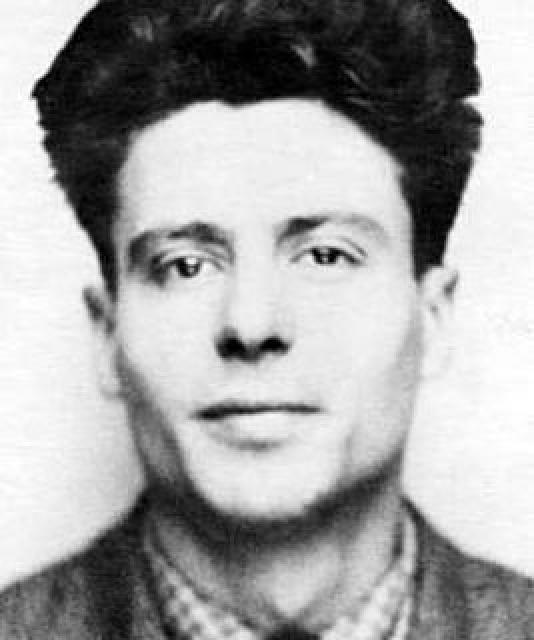
Developing an interest in cinema, Vigo worked as an assistant to renowned cinematographer Léonce-Henri Burel in 1928, helping him on the film "Venus". After inheriting 100,000 francs following a relative's death, Vigo purchased a used camera and began working on his first film in 1930. This was a silent documentary short called "À propos de Nice", which revealed Vigo's ability to capture the natural beauty of reality and give mundane scenes a stylized poetic tone. His second film was a surrealistic documentary short called "Taris, ou la natation", released in 1931, which featured champion swimmer Jean Taris as the main character.
Major Films and Legacy
In 1933, Vigo released his third film, a feature-length picture titled "Zero for Conduct". It depicted the life of a boys' boarding school and its students who rebelled against the school's rules and teachers, whose caricatured images were clearly borrowed by Vigo from his childhood memories. This film was initially censored and was only released without restrictions in 1945. In 1934, Vigo directed his fourth and final film, the leisurely melodrama "L'Atalante". The film's plot was simple and depicted the story of newlyweds, country girl Juliette and skipper Jean, who sail on Jean's barge named "L'Atalante" through the canals of France to Paris. When Juliette, despite her husband's prohibition, runs off to see the city, Jean, angered, decides to sail away without her. However, the separation begins to cause him great suffering. Fortunately, his assistant, the eccentric old man and cat lover Père Jules, finds Juliette, brings her back, and the young couple reunites. This unpretentious story, enriched with Vigo's lyricism and poetic motifs, had a significant influence on directors of the French New Wave. Boris Kaufman, the brother of Soviet film director Dziga Vertov, served as the cinematographer for all four of Vigo's films. Unfortunately, Vigo's talent was not able to fully blossom. Less than a month after the premiere of "L'Atalante", on October 5, 1934, he died of tuberculosis at the age of twenty-nine.
In 1951, the Jean Vigo Award was established in France, which has since been awarded annually to young filmmakers. Among the recipients of the award are Claude Chabrol (awarded in 1959 for the film "Le Beau Serge"), Jean-Luc Godard (awarded in 1960 for the film "Breathless"), and others.


