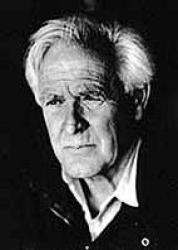
Jeck Danlap
 USA
USA- Sergeant Jack Dunlap: An Ordinary American Turned Spy
- A Day in the Fort-Mead
- A Clerk-Courier
- Betrayal
- A Lavish Life
- The Unnoticed Obvious
- The Lie Detector
- Finding a Solution
- The Shocked Leadership
Sergeant Jack Dunlap: An Ordinary American Turned Spy
Sergeant Jack Dunlap was an average American living with his family in a suburban home near Washington, D.C. He earned a regular salary of $100 a week, just like most middle-class Americans. However, his daytime job was far from ordinary.
A Day in the Fort-Mead
Every morning, Dunlap entered Fort Mead, one of the most impressive buildings in America, with a special pass. The main corridor of the building was three times the length of a football field and filled with electric cables and wires. In the basement, the most powerful computers in the world were located, while radio antennas captured information from all over the globe. The building was surrounded by three layers of electrified barbed wire, patrolled by armed Marines. Inside this cement fortress, which was shaped like the Latin letter U, work continued non-stop. Hundreds of people processed classified information, deciphered encoded messages, and analyzed the data. This building served as the headquarters of the NSA, one of the main intelligence agencies of the United States.
A Clerk-Courier
Dunlap was not a cryptographer. His position was much more modest. Despite being a Sergeant in the U.S. Army, he worked as a simple courier at the NSA. His job involved delivering documents from one department to another. His official position was called a "clerk-courier" - slightly more prestigious than a "gofer." If anyone at work knew Dunlap, it was only by face. No one bothered to remember his name.
Betrayal
However, Dunlap was not as inconspicuous as he seemed. In the past, he had received several medals for bravery and also served as a driver for the personnel department chief at the NSA. But this existence did not satisfy him. He believed he deserved a better life. In 1960, during his third year at the NSA, a Soviet intelligence agent approached him. Dunlap agreed to work for the Soviet Union. He was promised a substantial sum of money. His task was to make copies of the documents passing through his hands, secretly take them out of the NSA building, and hand them over to another Soviet agent. It was absolutely safe. No one would suspect him. After all, wasn't he a Sergeant in the U.S. Army - a loyal and trustworthy soldier?
A Lavish Life
In just the first year of working for Soviet intelligence, Dunlap earned around $40,000. This far exceeded the annual salary of a high-ranking army officer. His lifestyle changed dramatically.
A modest and quiet family man who worked nights at a gas station for a dollar per hour transformed into a wealthy man living the high life. In a short period, he acquired a new car, a yacht, and a motorboat. Luxurious mistresses replaced one another. Dunlap also enjoyed his free time to the fullest - amateur sailing regattas, car races, and speedboat races became his favorite pastimes.
When someone asked Dunlap about the source of his wealth, he pretended to be innocent. "I received a small inheritance," he usually replied. If someone wondered why a wealthy man like him would spend his precious time working as a courier, Dunlap would just smile mysteriously. He claimed that his low position was just a cover and that he was secretly carrying out a special mission for the NSA.
The Unnoticed Obvious
The NSA seemed to have not noticed the unexpected changes in the life of their unassuming courier. No one paid attention to the fact that he now arrived at work in an expensive car. They granted him full-day leave when he requested it, citing his desire to participate in speedboat races. When he injured his back during a sailing regatta, the authorities even sent an ambulance to take him to the agency's hospital.
Dunlap went on copying classified documents right under the noses of the NSA. Every month, he handed over the obtained materials to his Soviet contact. These meetings often took place in crowded places, such as car parks. Once, he even brought along one of his mistresses.
However, in March 1964, Dunlap's contract with the NSA expired. Fearing that he might lose his "safe spot," Dunlap planned to leave the military and join the NSA as a civilian employee. It was at this point that an unpleasant surprise awaited him.
The Lie Detector
The NSA employed both military personnel and civilians. It was believed that soldiers were beyond suspicion. However, civilian employees were required to undergo a lie detector test as part of their hiring process.
Dunlap remained composed during the test, but it did not save him. The polygraph revealed cases of "petty theft" and "misconduct." Nevertheless, the NSA still hired him and retained his position. Two months later, when it was discovered that the modest courier was living far beyond his means, Dunlap was finally denied access to classified information.
Now, he realized that serious trouble was on the horizon. His contact with the Soviet agent had been severed. Exposure was inevitable. He faced either a life sentence or death by electrocution.
Finding a Solution
In June 1964, Dunlap planned to participate in a car race for production cars. He went with a group of friends and casually mentioned his desire to commit suicide. Of course, no one believed him. However, the next day, he was found semi-conscious. He had taken large doses of sleeping pills and alcohol.
After this incident, the NSA, together with the military police and the counterintelligence unit of the U.S. Army, launched an investigation into Dunlap's case. On June 20, he attempted to shoot himself.
A friend who happened to be nearby managed to wrestle the gun away from him.
Two days later, Dunlap drove out of town in his car. He parked near a dried-up stream, tightly closed all the windows, and left the engine running. His body was found the next morning. Dunlap had died from carbon monoxide poisoning.
The Shocked Leadership
In August, a month after Dunlap's suicide, the NSA finally gathered evidence that he had been a spy. However, they never found out exactly what information Dunlap had managed to pass on to Soviet intelligence. "We will probably never know what documents passed through his hands," one investigator said. "It's better for us to be cautious and assume that all the information processed by his department is now in Moscow."
This was highly unpleasant for the NSA leadership. In addition, as a mockery of the "deceived" authorities, Dunlap was buried in Arlington National Cemetery with full military honors. His grave was located just a few steps away from the burial site of President John F. Kennedy. Now, one of America's greatest heroes rests alongside a traitor and spy who had inflicted significant harm to his country.