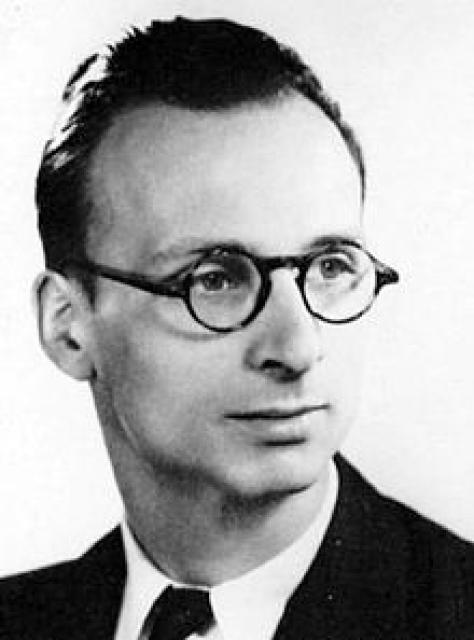
Jehan Ariste Alain
 France
Biography of Jean-Ariste Alain
Jean-Ariste Alain, a French organist and composer, is rightfully considered one of the most unconventional French composers of the first half of the 20th century. He was born in Saint-Germain-en-Laye, a western suburb of Paris, into a family of musicians. His father, Albert Alain, was a highly talented organist, composer, and organ builder, who had studied with Alexandre Guilmant and Louis Vierne. Jean's younger brother, Olivier Alain, was also a composer, organist, and pianist, while his younger sister, Marie-Claire Alain, played the organ as well.
Jean took his first piano lessons from Augustin Pierson, who played the organ in Versailles. His father taught him the art of playing the organ, using an instrument built by Albert himself in their family living room. At the age of 11, Jean occasionally substituted for musicians in Saint-Germain-en-Laye, despite his relatively young age. He could easily compete with experienced and skilled musicians, at least within the boundaries of his hometown.
From 1927 to 1939, Alain studied at the Paris Conservatoire. During this time, he won the first prize in the harmony competition, under the guidance of André Bloch, and the first prize in the fugue competition, led by Georges Caussade. Jean continued to study the organ with Marcel Dupré, and in 1939, he won another prize for improvisation on this instrument.
Alain dedicated a considerable amount of time to studying composition. His mentors in this field were Paul Dukas and Jean Roger-Ducasse. In 1935, Jean obtained a position as a resident organist in Paris, where he worked for four years.
He frequently performed in the synagogue on Rue Notre-Dame-de-Nazareth, where the only surviving recording of his playing was made in 1938, capturing a six-minute improvisation. Alain's relatively brief career as a composer began in 1929 when he was only 18 years old and lasted until the beginning of World War II. His works were influenced by a range of well-known composers such as Claude Debussy and Olivier Messiaen, as well as his interest in the culture of the Far East, Renaissance melodies, and jazz compositions. Alain composed choral music, chamber works, songs, and piano compositions, but he is most renowned for his works for the organ, with his most famous piece being "Litanies."
While music played an important role in Alain's life, it was not his only passion. Jean was always interested in mechanics and was an excellent motorcycle rider, skills that later proved useful during his service in the French army. On June 20, 1940, Alain was sent on a reconnaissance mission and encountered a group of German soldiers. He heard the approaching enemies from a distance, abandoned his motorcycle, and took a favorable position. Before being struck by an enemy bullet himself, Jean managed to shoot down 16 enemy soldiers. For his bravery, Alain posthumously received the Croix de Guerre. Historians claim that Jean's extraordinary courage impressed even the surviving German soldiers who had encountered him; they even buried him in full combat attire.
Jean-Ariste Alain's wife, Madeleine Payan, was left alone with their three children.


