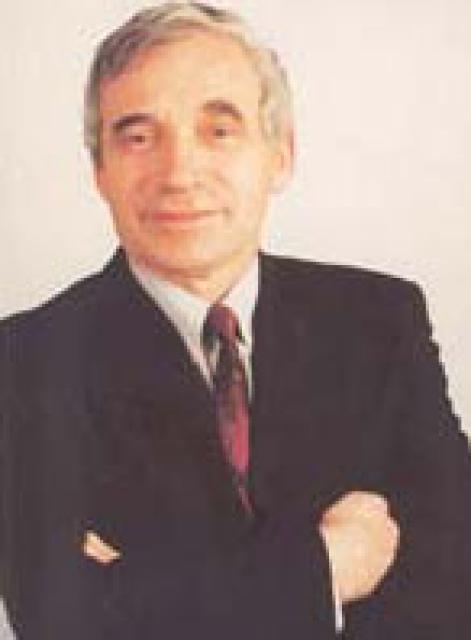
Jeliu Jelev
 Bulgaria
- Biography of Zhelyu Zhelev
- Analysis of Fascism and Communism
- Link between Communism and Fascism
- Predictions on the Collapse of Totalitarian Regimes
- Legacy
Biography of Zhelyu Zhelev
Zhelyu Zhelev was a Bulgarian politician, thinker, and political activist. He served as the President of Bulgaria from 1990 to 1996. Zhelev earned a Doctorate in Philosophy in 1987. He was a prolific writer and his major works include "Fascism: Totalitarian State" (written in 1967, first published in 1982), "Relational Theory of Personality" (1987), "Real Physical Space" (1989), among others.
Analysis of Fascism and Communism
In his seminal work "Fascism: Totalitarian State," Zhelev conducted a comprehensive study of the ideology, political structures, economic foundations, and social practices of fascist states. He drew general conclusions about the nature, essence, formation, development, and collapse of totalitarian systems. According to Zhelev, totalitarianism in the 20th century manifested in two main forms: communism and fascism. He argued that despite communism's decline after the Stalinist era, it still represented the most advanced and complete model of a totalitarian regime. Zhelev emphasized that fascism, often considered the antithesis of communism, was simply an incomplete and unstable version of it.
Link between Communism and Fascism
Zhelev postulated an organic connection between communism and fascism, asserting that those who denied this link were driven by ideological motivations rather than scientific analysis. He argued that there was no substantial difference between the two systems and, if anything, communism was superior. He referred to fascism as a poor imitation or plagiarism of the authentic and perfected totalitarian regime of communism. Zhelev noted that in historical terms, fascist regimes emerged later and ended earlier than communist ones.
Predictions on the Collapse of Totalitarian Regimes
In the preface to the Soviet edition of his book "Fascism" in 1991, Zhelev analyzed the key moments leading to the decline of totalitarian systems and made predictions about the future of East European countries and the USSR. He suggested that the dismantling of the communist variant of a totalitarian system could potentially lead to its degradation into a more imperfect and unfinished form of fascism. However, he believed that such a transition could also be a significant step towards democracy. Zhelev highlighted the challenges faced by an empire, such as the Soviet Union, when transitioning to democracy, as it could potentially lead to its dissolution if not accompanied by courageous and visionary leadership.
Legacy
Zhelev's analysis and predictions regarding the nature and prospects of totalitarian regimes in Eastern Europe and the USSR have proven to be particularly insightful. His work shed light on the difficulties faced by an empire in transitioning to democracy and the potential risks of a state's disintegration during this process. Zhelyu Zhelev's contributions to political thought and his role as President of Bulgaria have left a lasting impact on the country's political landscape.


