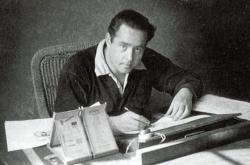
Jerzy Kawalerowicz
 Poland
Biography of Jerzy Kawalerowicz
Jerzy Kawalerowicz was a Polish film director known for his obsession with recreating past times on screen. He was born on January 19, 1922, in Gwóźdźec, Ukraine. During his studies at the Academy of Fine Arts in Krakow, he completed film courses in 1946 and became an assistant director on films such as "Forbidden Songs" (1947, directed by Leonard Buczkowski), "The Last Stage" (1948, directed by Wanda Jakubowska), and "Steel Hearts" (1948, directed by Stanisław Urbanowicz).
From 1956 to 1968, Kawalerowicz worked as an organizer, and from 1972 onwards, he served as the artistic director of the film association "Kadr." He was one of the founders and the first chairman of the Polish Filmmakers' Association (1968-1978), and he currently holds the honorary position of Chairman of the PFA. In 1998, Kawalerowicz was awarded the title Doctor honoris causa by the University of Paris-Sorbonne.
Early Career
Kawalerowicz made his debut in feature films in 1951 with "Gromada" (The Commune), which he co-directed with Kazimierz Sumerski. In subsequent films like "Celuloza" (Cellulose) and "Podgwiazda Frygyjska" (Under the Phrygian Star) (1954, presented at the Karlovy Vary International Film Festival), he made bold attempts to deviate from the schematic canons of socialist realism that dominated the culture at the time. These attempts became more pronounced in his next film, "Cien" (The Shadow) (1956).
Kawalerowicz's work is characterized by genre and thematic diversity. His films, described as the creations of a "unique master of style, a virtuoso of the camera, and a penetrating psychologist," maintain some common formal features but do not follow a clear problem line. Kawalerowicz is equally interested in making political films about individuals caught in great historical events and films about the intimate experiences of ordinary people. However, all the problems he explores are depicted through the personal tragedies of his characters.
Notable Works
In films such as "Smierc prezydenta" (Death of a President) (1977, presented at the Berlin International Film Festival in 1978) and "Jeniec Europy" (Prisoner of Europe) (1989), which depicts the last days of Napoleon on the island of St. Helena, Kawalerowicz examines the issue of personality in history and the struggle for power. "Pociag" (Night Train) (1959, presented at the Venice Film Festival and London Film Festival) is a lyrical tale about people trying to overcome their alienation from others and discovering an unexpected willingness to help each other.
One distinctive characteristic of Kawalerowicz's work is his obsession with recreating past times on screen. In "Faraon" (Pharaoh) (1965, based on a novel by Bolesław Prus, nominated for an Oscar), he creates a vivid picture of ancient Egypt, focusing on the conflict between young Pharaoh Ramses and the priest Herhor. In "Matka Joanna od aniolow" (Mother Joan of the Angels) (1961, based on a story by Jarosław Iwaszkiewicz, awarded the Silver Palm at the Cannes Film Festival), he portrays the tragedy of an individual rebellion against the stifling conditions and religious canons of the 17th century. "Austeria" (1982) reconstructs the world of the long-gone Jewish Hasidic culture.
In 2000, at the age of seventy-nine, Kawalerowicz began shooting the largest Polish production to date, a film called "Quo Vadis" based on the novel by Henryk Sienkiewicz, which resurrects the world of ancient Rome.
Filmography:
- "Gromada" (The Commune), 1951
- "Celuloza" (Cellulose)
- "Podgwiazda Frygyjska" (Under the Phrygian Star), both 1954
- "Cien" (The Shadow), 1956
- "Prawdziwy koniec wielkiej wojny" (The Real End of the Great War), 1957
- "Pociag" (Night Train), 1959
- "Matka Joanna od aniolow" (Mother Joan of the Angels), 1961
- "Faraon" (Pharaoh), 1965
- "Gra" (The Game), 1969
- "Maddalena" (Maddalena, Italy-Yugoslavia), 1970
- "Smierc prezydenta" (Death of a President), 1977
- "Spotkanie w Atlantyku" (Meeting in Atlantic), 1979
- "Austeria," 1982
- "Jeniec Europy" (Prisoner of Europe), 1989
- "Bronsteines kinder" (Bronstein's Children, Germany), 1990
- "Za co?" (For What?), 1995
- "Quo Vadis," 2000.