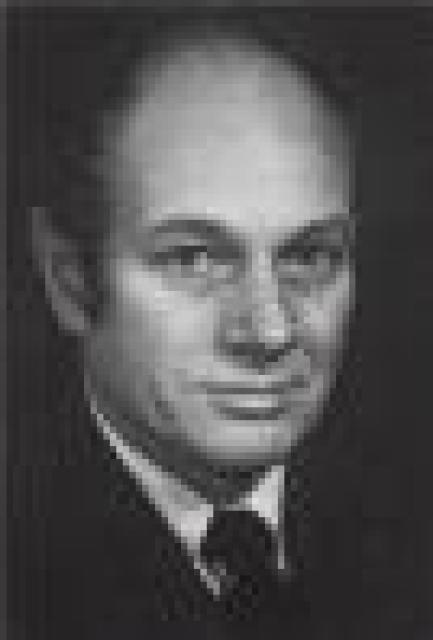
Jeyms Kronin
 USA
USABiography of James Cronin
American physicist James Watson Cronin was born in Chicago, Illinois, to James Farley Cronin, a senior student of classical languages at the University of Chicago, and Dorothy (Watson) Cronin. His parents met while attending a class on ancient Greek language at Northwestern University. After a brief stay in Alabama in 1939, the family moved to Dallas, Texas, where Cronin's father became a professor of Latin and ancient Greek languages at Southern Methodist University. Cronin attended local elementary and high schools in Highland Park, and then continued his education at Southern Methodist University, where he graduated in 1951 with a bachelor's degree in physics and mathematics. Cronin considers his true education to have begun in the fall of 1951 when he became a graduate student at the University of Chicago. Among his teachers were Enrico Fermi, Maria Goeppert-Mayer, Edward Teller, Val Telegdi, Marvin Goldberg, and Murray Gell-Mann. It was Gell-Mann who sparked Cronin's interest in the emerging field of elementary particle physics. Cronin obtained his doctoral degree in 1955, defending a dissertation on experimental nuclear physics, supervised by Samuel K. Allison. He then joined the group of Rodney Cool and Oreste Piccioni at the Brookhaven National Laboratory on Long Island. These researchers were working on the newly built Cosmotron accelerator, capable of accelerating protons to energies of 3 billion electron volts. In Brookhaven, Cronin met Val L. Fitch, who invited him to work at Princeton University in the fall of 1958. Carrying out independent research programs, these two scientists conducted a joint experiment in 1963 that became a classic, undermining what seemed to be an unshakable idea about one of the laws of nature. Physicists believed that there were three fundamental laws of symmetry in nature. According to the first law, known as "charge conjugation symmetry" (C), the outcome of any physical experiment should remain unchanged if each particle in the experiment is replaced by its corresponding antiparticle (i.e. a particle-twin with opposite electric charge and some other properties). In other words, a world entirely composed of antimatter should follow the same physical laws as a world composed of matter. The second law, "parity conservation" (P), states that any reaction between particles should remain the same if all geometric quantities, such as spatial coordinates, are replaced by their mirror images, meaning that no reaction should be able to distinguish between right and left. The third law, "time-reversal symmetry" (T), states that any reaction between elementary particles should proceed equally well in both the forward and backward directions in time. For example, if two particles can merge to form a third particle, the reverse reaction should also be possible. In 1956, T. D. Lee and C. N. Yang concluded that parity conservation (P) was possibly violated in some reactions related to the weak interaction, which is responsible for certain forms of radioactive decay, as opposed to the strong interaction that holds particles together inside atomic nuclei. They proposed experiments that would help answer this question. And soon, C. S. Wu and her colleagues from Columbia University demonstrated that parity is not fully conserved in the beta decay (emission of an electron) of certain radioactive nuclei: the nuclei emit more "left-oriented" electrons than "right-oriented" electrons. Other researchers found that charge conjugation (C) is also only approximately conserved. In some physical processes, particles are found to have a preference for over antiparticles. Physicists were able to save some semblance of order by combining C and P into a combined symmetry law, known as CP symmetry, which is confirmed by experimental results. The violation of C is compensated by a simultaneous violation of P, and vice versa. For example, if an excess of left-oriented electrons violates parity conservation, then the simultaneous replacement of particles with antiparticles would turn left-oriented electrons into right-oriented positrons while leaving the physical laws unchanged. It was the universal conservation of the combined CP symmetry, proposed to explain the violation of C and P separately, that Cronin and Fitch disproved in the summer of 1963. Cronin and Fitch studied beams of neutral K mesons, now called kaons (particles with half the mass of a proton), generated by the accelerator at Brookhaven. They did not set out to disprove CP symmetry in their experiment; on the contrary, they hoped to confirm it. However, in a series of experiments conducted with the participation of René Turlay from the Center for Nuclear Studies in France and James Christenson, a graduate student from Princeton, Cronin and Fitch discovered unequivocal evidence of CP symmetry violation. In the decay of a certain type of neutral K mesons, approximately one event out of 500 did not pass the symmetry test. The first confirmation of CP symmetry violation was indirect; subsequent experiments made this effect evident. In the decays of K mesons, left-oriented particles predominate over right-oriented ones (parity violation P), and matter dominates over antimatter (charge symmetry violation C). Furthermore, the combined CP symmetry is also violated in the decays, with left-oriented matter prevailing over right-oriented matter. This manifested in the form of a forbidden type of decay. According to CP symmetry, short-lived neutral K mesons should decay into two pions, while long-lived neutral K mesons (on average, they exist 500 times longer than the short-lived ones) can only decay into three pions. The experimental results, initially met with skepticism, were subjected to six months of careful analysis and verification before publication. The analysis convincingly showed that some long-lived K mesons decay into two pions. The only symmetry that remained beyond doubt was the combined CPT symmetry, which is a combination of all three symmetries: charge conjugation, parity, and time reversal. Any phenomenon observed in nature has the property that the corresponding phenomenon arising from the simultaneous replacement of left and right, matter and antimatter, and reversal of time, must be equally probable. This fact and the violation of CP invariance led to the conclusion that time reversal symmetry (T symmetry) must be violated. If CP symmetry is violated, then for CPT symmetry to be preserved, time symmetry (T symmetry) must also be violated. A K meson decay that violates CP symmetry cannot be reversed in time. These conclusions prompted scientists to not only reconsider previous explanations of physical phenomena but also create a new theory of the universe's evolution. Indeed, if matter and antimatter were formed in equal amounts in the early moments of the "big bang," they would have fully annihilated each other. However, CP symmetry violation allows antiparticles to decay faster than particles, and thus disappear faster, leaving an excess of particles in the form of the universe's matter. As for annihilation processes, they contribute to the accumulation of electromagnetic radiation in the universe. In 1964, Cronin became a full professor at Princeton University but spent that year at the Center for Nuclear Studies in France, working with Turlay. The following year, he returned to Princeton, where he continued research on CP symmetry violation in K meson decays. In 1971, he joined the faculty of the University of Chicago, where he conducted experiments at the National Accelerator Laboratory Fermi, located just outside the city limits. In 1980, Cronin and Fitch shared the Nobel Prize in Physics "for the discovery of violations of fundamental symmetry principles in the decay of neutral K mesons." In his Nobel lecture, Cronin said, "We must constantly remember that the violation of CP symmetry, however small it may be, is the most real effect... This effect tells us that there is a fundamental asymmetry between matter and antimatter, and that it indicates the possibility of the manifestation of the time reversal asymmetry at the level of some weak interactions... We hope that someday this mysterious message from nature will be deciphered." After receiving the Nobel Prize, Cronin continues to work at the University of Chicago, where he seeks to understand the deep reasons for the violation of CP symmetry. In 1954, Cronin married Annette Martin, a graduate student at the University of Chicago. They have three children. He spends his leisure time mostly at his country house in Wisconsin and enjoys skiing. In addition to the Nobel Prize, Cronin has been awarded the "Achievements in Science" prize by the Research Corporation for Science Advancement (1968), the John Price Wetherill Medal of the Franklin Institute (1975), and the Ernest Orlando Lawrence Memorial Award in Physics from the U.S. Energy Research and Development Administration (1977). He is a member of the National Academy of Sciences, the American Physical Society, and the American Academy of Arts and Sciences.





