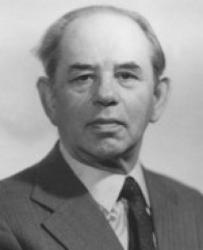
Jiddu Krishnamurti
 USA
USABiography of Jiddu Krishnamurti
Jiddu Krishnamurti was an Indian philosopher and spiritual teacher. He was born into a strict vegetarian Brahmin family in colonial India, and his early years were spent in Madras, where he came into contact with prominent theosophist Charles Webster Leadbeater. Leadbeater and Annie Besant, leaders of the Theosophical Society at the time, took Krishnamurti under their wing and raised him, believing him to be the anticipated "vehicle" for the World Teacher. However, Krishnamurti eventually lost faith in theosophy and dissolved the organization created to support him, the Order of the Star in the East.

Krishnamurti was born on May 12, 1895, in a small town called Madanapalle in the Chittoor district of Andhra Pradesh. He was the eighth child in his family and was named after the Hindu god Krishna. His father, Jiddu Narainiah, was a civil servant under British colonial administration, and his mother, Sanjeevamma, passed away when he was 10 years old. Krishnamurti's parents were cousins, and they had a total of 11 children, of which 5 died before reaching adulthood. They were strict vegetarians and abstained from consuming any European food, including eggs.

Krishnamurti had a difficult childhood, being perceived as slow and often subjected to physical abuse both at school and at home. He described his state of mind as a child as "empty of thought," constantly observing and listening but devoid of any thoughts or associations.
At the age of 18, Krishnamurti began writing memoirs about his childhood and early youth, recounting "visions" in which his deceased mother and sister appeared to him. In 1907, his father retired from his position and wrote to Annie Besant, then president of the Theosophical Society, seeking employment in their headquarters in Adyar due to financial constraints. His father had been a member of the Theosophical Society since 1882 and his request was approved. The family moved to Adyar in January 1909, where they initially lived in a small cottage with poor sanitary conditions. Krishnamurti and his siblings suffered from malnutrition and infestations of lice.
In April or May 1909, Krishnamurti was accidentally noticed by Charles Webster Leadbeater, a high-ranking theosophist who claimed to have clairvoyant abilities. Despite Krishnamurti's unremarkable appearance, Leadbeater was struck by his "remarkable aura, without a trace of egoism," and remained steadfast in his belief that Krishnamurti would become a "spiritual teacher and great orator." Although Leadbeater had previously chosen another youth as the "vehicle" for the World Teacher, Krishnamurti became the sole candidate once he was "discovered." The Theosophical Society took Krishnamurti under their protection, and he began living with Leadbeater and receiving private education from theosophists. After a year, Annie Besant officially became his guardian, along with his brother Nityananda.
Despite initial doubts about his physical condition and ability to be educated, Krishnamurti quickly learned English and became relatively proficient in speaking and writing within six months. He had a natural inclination for sports and mechanical skills, and he developed a keen interest in literature, including reading the Old Testament and works by Shelley, Dostoevsky, and Nietzsche.
In 1911, Krishnamurti and his brother Nitya traveled to England with Annie Besant. Krishnamurti delivered his first public speech during this trip, addressing the young members of the Order of the Star in the East.
In 1912, Krishnamurti's father took legal action to regain custody of his sons. After a lengthy legal battle, he lost, and Annie Besant officially became Krishnamurti's and Nitya's guardian. They continued to travel with the Theosophical Society representatives to various countries until the outbreak of World War I in 1914.
After the war, Krishnamurti and his brother embarked on a worldwide journey, giving lectures and fulfilling the responsibilities as the head of the Order of the Star in the East. In 1922, Krishnamurti experienced a profound transformation in Ojai, California, which marked a turning point in his life. He went through a spiritual awakening and a shift in consciousness, which he referred to as the "process." This state would visit him periodically throughout his life.
In the following years, Krishnamurti continued to give lectures and engage in dialogues, addressing topics such as radical change, the illusion of individuality, and the unity of love, beauty, peace, and kindness. He founded several schools based on his educational ideas, such as the Rishi Valley School in India, aimed at nurturing "integrated" individuals free from conflict.
Krishnamurti's teachings evolved over time, influenced by cultural changes in the 1960s and the growing interest in alternative lifestyles. He engaged in dialogues with physicist David Bohm, which led to a greater precision in his terminology and a more careful use of concepts.
Despite the dissolution of the Order of the Star in the East and the break from theosophy, Krishnamurti continued to attract audiences worldwide. His message resonated with people seeking answers to fundamental questions. He faced challenges and criticism but remained dedicated to sharing his insights until his passing on February 17, 1986.