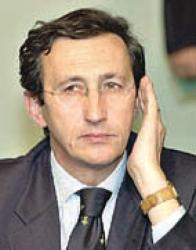
Jim Bolger
 New Zealand
- Early Life and Political Career
- Parliamentary Career
- Leader of the National Party and Prime Minister
- Prime Minister
- Economic Policies
- Foreign Policy
- Electoral Reform
- Republicanism
- MMP Election and Coalition
- Treaty of Waitangi Settlements
- Resignation
- Post-Political Career
- Interesting Facts
Early Life and Political Career
James Brendan Bolger was born on July 31, 1935, in Opunake, Taranaki, to Irish immigrant parents. He left school at the age of 15 to work on the family farm. In 1963, he married Joan Ridell, and two years later, they moved their dairy and sheep farm to Te Kuiti.
Bolger became involved in local farming politics, and in 1969, he was approached by Robert Muldoon to accompany him on a tour to learn about the region's farmers' concerns. This experience gave Bolger firsthand knowledge of the challenges faced by farmers and the political tactics of Muldoon's opponents.
Parliamentary Career
In 1972, Bolger entered politics as a National Party MP for King Country electorate. He held the seat, which was renamed Taranaki-King Country in 1996, until his retirement in 1998. In 1975, he became the first Minister of Fisheries and Associate Minister of Agriculture in New Zealand, and after the 1978 election, he was appointed Minister of Labour.
Leader of the National Party and Prime Minister
Following the National Party's defeat in the 1984 general election, Bolger and deputy leader Jim McLay replaced Muldoon as party leaders. Bolger became deputy leader under McLay, but in 1986, he mounted an unsuccessful challenge to McLay's leadership.
After a poor election result for National in 1987, Bolger led the party to a landslide victory (the largest in New Zealand's history) in 1990, making him Prime Minister.
Prime Minister
Three days after being sworn in, Bolger's government was forced to bail out the Bank of New Zealand, which had become the largest state-owned bank in the country. The bailout totaled $380 million and forced the government to borrow $740 million. This had an immediate impact on Bolger's premiership, and his first budget, known as the "Mother of All Budgets," was met with resistance.
Economic Policies
Initially, Bolger's government continued the economic and social reforms of the previous Labour government, spearheaded by Finance Minister Ruth Richardson. These included drastic cuts to public spending, known as "Ruthanasia," particularly in health and welfare. The first budget also broke an election promise to remove the surcharge on superannuation.
In the lead-up to the 1993 general election, Bolger replaced Richardson with the more moderate Bill Birch. Under Birch, spending on core social services such as health and education was increased.
Bolger's government also passed the Fiscal Responsibility Act 1994. It also introduced the Building Act 1991, which has been blamed by some for contributing to the prolonged housing crisis of the 1990s.
Foreign Policy
Bolger's government continued the anti-nuclear policy of the previous Labour government.
Electoral Reform
Despite opposition within his own party, Bolger initiated a referendum on changing New Zealand's electoral system from the British-style "first-past-the-post" to proportional representation. In 1992, New Zealanders voted to adopt a mixed-member proportional (MMP) system. This was confirmed in a referendum and the 1993 general election, which National won.
Originally, Bolger had proposed a return to a bicameral system with an elected senate, but this was rejected in favor of the MMP reform.
Republicanism
In 1994, Bolger made a surprise announcement that New Zealand should become a republic, following the lead of Australian Prime Minister Paul Keating. Bolger denied that his views were connected to his Irish ancestry. Three government ministers (John Carter, John Banks, and Simon Upton) publicly disavowed Bolger's call for a republic, and only about one-third of the population supported the idea. A proposal to remove the Privy Council of the United Kingdom as the country's court of final appeal was also unpopular, although the fifth Labour government abolished the right of appeal in 2003.
Bolger's government also ended the granting of British honors in 1996, replacing them with a New Zealand-based honors system. At a conference in 2007 on his premiership, Bolger renewed his call for New Zealand to approach the British monarch about becoming a republic: "I've talked to Her Majesty on a number of occasions when I was over there, about the fact that at some stage New Zealand will choose to have its own head of state, and we have discussed this very carefully, and she was neither surprised nor dismayed, and she didn't order my head to be chopped off."
MMP Election and Coalition
New Zealand's first MMP election was held in 1996, and Bolger continued as Prime Minister while a parliamentary majority coalition was formed. Both Bolger and Labour leader Helen Clark sought support in the new Parliament from the New Zealand First party. Its leader, Winston Peters, had left National to form his own party and opposed many of the market reforms proposed by both National and Labour. In December, a coalition was formed between National and New Zealand First, with Peters appointed as Treasurer (a position above the existing Finance Minister, held by National's Bill Birch).
Treaty of Waitangi Settlements
Bolger's government made three significant Treaty of Waitangi settlements. Made primarily during the tenure of Justice Minister and Treaty Negotiations Minister Sir Douglas Graham, these included settlements with Ngāi Tahu, Waikato-Tainui, and the Sealord fisheries claims.
However, Bolger's government's creation of a $1 billion "fiscal envelope" for all claims and settlements—a cap on the total amount of compensation paid—became unpopular with Māori.
Resignation
Growing opposition to Bolger's cautious approach led to a leadership coup led by Transport Minister Jenny Shipley in 1997. Upon returning from an overseas trip, Bolger was informed that he had lost the support of the party caucus to remain leader and Prime Minister. On December 8, he resigned, and Shipley was sworn in as his replacement, becoming New Zealand's first female Prime Minister. Bolger became a junior minister in Shipley's government.
Post-Political Career
In 1998, Bolger retired from Parliament, triggering a by-election in the Taranaki-King Country electorate, and was appointed Ambassador to the United States. He returned to New Zealand in 2001 and was appointed Chairman of the state-owned New Zealand Post and its subsidiary Kiwibank.
He also became Chairman of Express Couriers Ltd., Trustees Executors Ltd., Gas Company Ltd., and the Board of Advisors of the World Agricultural Forum in St. Louis, USA, the US-New Zealand Council, and the Board of Directors of the Ian Axford Fellowships in Public Policy. In 1997, Bolger was made a Companion of the New Zealand Order of Merit.
On July 1, 2008, nearly 15 years after his government sold New Zealand Railways, the Labour government purchased it back. Bolger was appointed Chairman of the rail operator, renamed KiwiRail. Some, including Winston Peters, criticized his appointment. In response, Bolger acknowledged his role in the privatization of the railways, noting that "life is full of ironies."
On February 14, 2007, Bolger was elected Chancellor of the University of Waikato, succeeding John Jackman. In April 2007, Bolger revealed at a conference that he suffers from a painful nerve condition called trigeminal neuralgia, which is not life-threatening.
Bolger and his wife Joan are Catholic, and they have nine children. Bolger is anti-abortion. He is a member of the Collegium International.
Interesting Facts
Bolger is the only Prime Minister of New Zealand to come from Taranaki.
Bolger is known by the nickname "Spud," referring to his facial features and Irish heritage. The Royal New Zealand Air Force gave his Boeing 727 aircraft the call sign "Spud One." Bolger dislikes the nickname but once responded when a journalist addressed him as "Yo, Spud."
During a public meeting with the Irish Prime Minister, Bolger (who had a habit of mirroring the mannerisms of those he conversed with) spoke in an Irish accent.