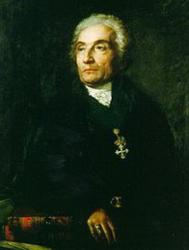
Johann Abiht
 Germany
- Johann Heinrich Abicht: A Kantian Philosopher and Professor
- Early Life and Education
- Academic Career
- Philosophical Influences
- Literary Works
- - "Philosophie der Erkenntnisse" (1791)
- Collaborative Publications
- - "Neues philosophisches Magazin" (1789-1790)
Johann Heinrich Abicht: A Kantian Philosopher and Professor
Johann Heinrich Abicht (1762-1816) was a German philosopher and a prominent figure in the Kantian movement. He was the father of the renowned medical scientist Adolf Abicht.
Early Life and Education
Born in Volkerstedt, Germany, Abicht studied philosophy at the University of Erlangen. He earned his master's degree in 1786 and his doctorate in 1790.
Academic Career
After graduating, Abicht held various academic positions in Erlangen, eventually becoming a full professor of philosophy in 1796. In 1804, he was appointed professor of logic and metaphysics at the Imperial University of Vilna in Lithuania.
Philosophical Influences
Abicht was deeply influenced by the philosophies of Immanuel Kant and Karl Leonhard Reinhold. He became a vocal advocate of Kantianism, seeking to apply its principles to various fields, including theology and ethics.
Literary Works
Abicht published numerous philosophical works, including:- "De philosophiae Kantianae ad theologiam habitu" (1788)
- "Versuch einer Metaphysik des Vergnügens nach Kantischen Grundsätzen" (1789)
- "Philosophie der Erkenntnisse" (1791)
- "Hermias, oder Auflösung der die gültige Elementarphilosophie betreffenden Aenesidemischen Zweifel" (1794)
Collaborative Publications
Alongside Friedrich Gottlob Born, Abicht edited the philosophical journals:
- "Neues philosophisches Magazin" (1789-1790)
- "Philosophisches Journal" (1794-1795)Legacy
Johann Heinrich Abicht played a significant role in the dissemination of Kantian philosophy and contributed to its development. His works continue to be studied by scholars interested in the history of philosophy and the Kantian tradition.