Christopher Dantch
 USA
USA- Early Years and Failed Football Career
- Transition to Medicine and Suspicions
- DiscGenics and Financial Success
- Incompetent Surgeon and Trail of Victims
- Death of a Friend and a Hospital Cover-Up
- Exposing the Truth
- Revelation and Loss of License
- Conviction and Life Sentence
- Legacy and Podcast
The Rise and Fall of Christopher Duntsch: The Notorious 'Doctor Death'
Early Years and Failed Football Career
Christopher Daniel Duntsch was born on April 3, 1971, with aspirations of becoming a professional football player. Despite his tireless efforts, his lack of talent became apparent. He attended college in Mississippi and later transferred to Colorado, constantly pleading with his coach for a second chance. However, his persistent errors and disorientation on the field ultimately led to his removal from the team.
Transition to Medicine and Suspicions
Disillusioned with sports, Duntsch turned to medicine. He excelled in academics at the University of Tennessee Health Science Center, earning a dual Doctor of Science and Doctor of Medicine degrees. He delved into topics such as brain cancer and stem cells. During his residency, Duntsch was caught using drugs before work, but for unknown reasons he managed to elude disciplinary action. His surgical experience during his fellowship year was minimal, with less than a hundred surgeries compared to the average of over a thousand.
DiscGenics and Financial Success
In 2008, Duntsch founded DiscGenics, a company producing stem cell-based therapeutics for spinal disc disorders, with the support of Russian scientists and seed funding from his mentors. While he enjoyed financial success, his credibility dwindled due to allegations of drinking and cocaine use at the workplace. DiscGenics ultimately stripped him of his company shares and dismissed him. Determined, he returned to wielding the surgical scalpel.
Incompetent Surgeon and Trail of Victims
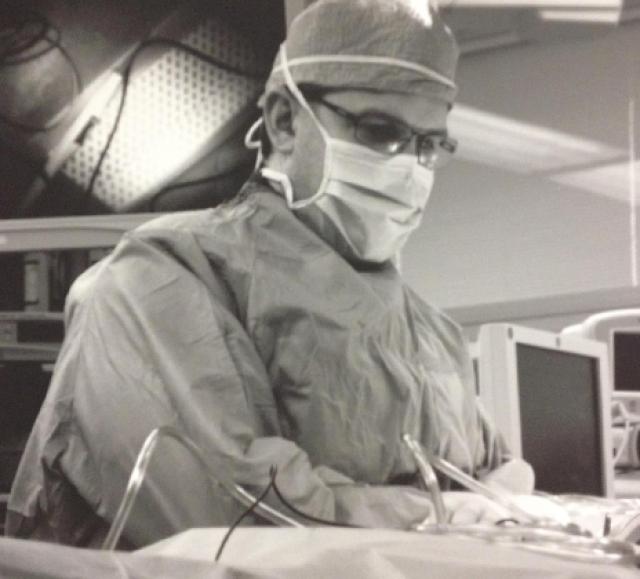
In 2011, Duntsch joined the Minimally Invasive Spine Surgery Institute in a Dallas suburb. His tenure was short-lived as he alienated staff and threatened to "clean up" Dallas for its perceived surgical inadequacies, while exhibiting reckless disregard for his professional duties. Despite his dismissal, Duntsch was allowed to operate at Baylor Regional Medical Center, where horrified surgical assistants refused to work with him in the future. During a spinal cord surgery, he flooded the operating room with blood, leaving his patient with severe mobility impairments and addiction to painkillers.
Death of a Friend and a Hospital Cover-Up
Duntsch's victims also included his longtime friend, Jerry Summers, whose vertebral artery was damaged during surgery. The panicked surgeon over-administered anticoagulants, crushing Summers' spinal cord and sending him to the intensive care unit. Paralyzed and deeply depressed, Summers later revealed that he had drank and used cocaine with Duntsch at a bar prior to the operation. He expressed disbelief at entrusting such a complex procedure to someone who had proven inept even at driving a car.
Exposing the Truth
Amid the unfolding investigations at Baylor Regional Medical Center, Duntsch secured a position at Dallas Medical Center, where his surgical disasters continued. An autopsy following one patient's death revealed a fatal mistake: Duntsch had blocked her vertebral artery. The hospital attempted to suppress the incident, and the killer surgeon left a trail of blood in two more hospitals. Numerous complaints failed to stop him, as the state's shortage of neurosurgeons guaranteed millions in government benefits.
Revelation and Loss of License
Duntsch's former colleague, Randall Kirby, grew weary of the atrocities and provided damning evidence against him. Perhaps the "Doctor Death" would have continued to harm patients if not for Brett Shipp, a reporter who became an advocate for one of Duntsch's victims.
Duntsch was initially suspended and then permanently stripped of his medical license in 2013. The following year, he was admitted to a psychiatric hospital, but his release was followed by an arrest for shoplifting a pair of pants.
Conviction and Life Sentence
Duntsch's attempt to whitewash his reputation by publicly refuting allegations may have been his undoing. When his claims reached prosecutors, they launched an intensive investigation and were horrified by their findings.
In July 2015, Duntsch was arrested and charged with one count of injury to a child, elderly individual, or disabled person, and five counts of aggravated assault with serious bodily injury. Media reports stated that 33 of his 37 surgeries ended with "unforeseen complications," including two deaths.
In 2017, Duntsch was found guilty of committing a first-degree felony: causing serious bodily injury to Mary Efurd during a spinal fusion surgery. He had drilled the wrong screw into her spinal canal, inserted implants into muscle tissue instead of bone, and severed all of her spinal root nerve endings. "This is about as bad as it gets in terms of mistakes that can be made," stated surgeon Robert Henderson, who performed an emergency operation to salvage Efurd's health after Duntsch's mistreatment.
Now 79 years old, Efurd relies on a wheelchair for mobility and cannot stand for longer than ten minutes. At his trial, the disgraced surgeon maintained his composure until experts exposed his numerous surgical blunders. There was a sense that Duntsch genuinely believed himself to be a skilled neurosurgeon.
However, the consensus emerged that the defendant entered the profession solely for financial gain and, as a sociopath, lacked any inherent desire or capacity to help people. In February 2017, Duntsch was sentenced to life in prison. He became the first American physician to receive such a severe punishment for medical malpractice.
Legacy and Podcast
On September 4, 2018, Wondery Media released a six-part podcast series titled "Dr. Death," thoroughly researched and hosted by reporter Laura Beil. The podcast shed light on the sordid tale of Christopher Duntsch, highlighting the devastating consequences of his incompetence and the systemic failures that allowed him to operate unchecked for far too long.