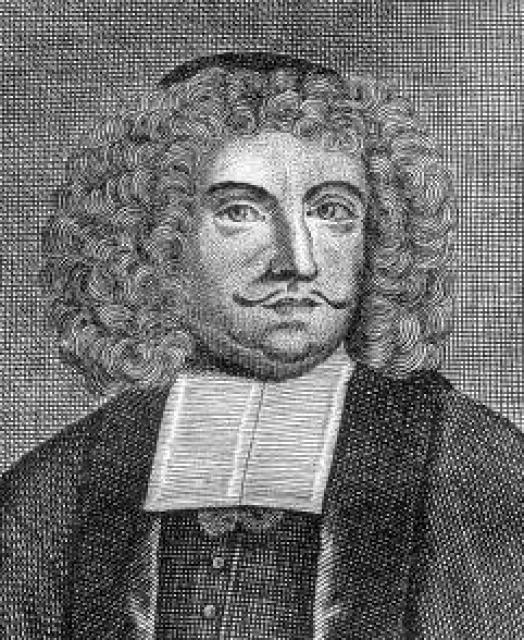
Johann Becher
 Germany
- Biography of Johann Becher
- Early Career and Medical Role
- Exploration and Alchemical Projects
- Legacy and Death
Biography of Johann Becher
Johann Becher was a German chemist and physician who is considered a precursor to the theory of phlogiston. He was born in 1635 in Speyer and pursued self-education, gaining significant knowledge in various scientific fields and eventually becoming a doctor.
Early Career and Medical Role
In 1666, Becher was appointed as a professor of medicine in Mainz and simultaneously held the position of court physician to the Elector of Mainz. He soon became the court physician to the Elector of Bavaria and later moved to Vienna, where he served at the royal court.
Exploration and Alchemical Projects
Becher had a penchant for fantastical projects, which he proposed to various high-ranking individuals. In 1666, he developed a project for the construction of the Rhine-Danube canal to enhance trade with the Low Countries. In 1678, he suggested a grand-scale project for the transformation of sand into gold.
He also engaged in mining and attempted to improve methods of ore extraction. In his early works, Becher followed the alchemical doctrine of the three principles, which stated that all substances consist of three elements. In a later work titled "Physicae Subterraneae," published in 1669 during his time in Munich, Becher proposed that all inorganic substances are composed of three "earths," and their proportions determine the properties of the substances. According to Becher, one of these earths, the "fatty" earth, was responsible for the combustibility of substances.
Legacy and Death
Becher's vague ideas found a follower in the German chemist Georg Ernst Stahl, who went on to establish the well-known phlogiston theory. Johann Becher passed away in London in October 1682.


