Boris Arbuzov
- Early Life and Education
- Academic and Research Career
- Establishing the Kazan Institute of Organic Chemistry
- Contributions to Organophosphorus Chemistry
- Political Career and Honors
- - Hero of Socialist Labor (1969)
- - Honorary Citizen of the City of Kazan (1987)
Early Life and Education
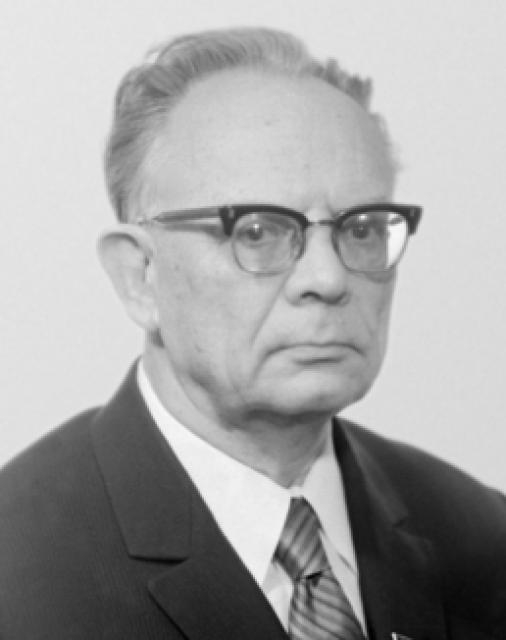
Boris Aleksandrovich Arbuzovwas born on October 22 (November 4), 1903, in Kazan, Russia, to Aleksandr Erminingeldovich Arbuzov, a renowned chemist and founder of organophosphorus chemistry. Following in his father's footsteps, young Boris pursued chemistry at the Kazan Institute of Agriculture and Forestry, graduating in 1926.
Academic and Research Career
Early Research with A.E. ArbuzovAfter graduation, Arbuzov began his academic career as an assistant at the Kazan Veterinary Institute (1929-1935). While working under his father's mentorship, he delved into the study of conifer tapping techniques, the composition of oleoresins, and the products of their processing, such as turpentine and rosin. This research earned him the A.M. Butlerov Prize from the Russian Physical-Chemical Society in 1928.
In 1929, together with A.E. Arbuzov, he discovered the formation of free radicals in the triarylmethyl series from triarylbromomethane. This led to further investigations in the field of phosphorus pyroacids, resulting in the development of the drug "Pyrofos" and the pesticide "Octamethyl."
Establishing the Kazan Institute of Organic Chemistry
From 1930 onward, Arbuzov shifted his focus to the chemical transformations of terpenes and the mechanisms involved in their oxide conversions. He discovered the rearrangement of bicyclic terpenes into aliphatic ones and conducted extensive research on the chemistry of Δ3-carene. Utilizing the Diels-Alder reaction, he established the structure of levopimaric acid in 1940.
In 1958, Arbuzov played a pivotal role in establishing the Kazan Institute of Organic Chemistry of the USSR Academy of Sciences. From 1958 to 1971, he served as its director, guiding the institute's research and development efforts in organic chemistry.
Contributions to Organophosphorus Chemistry
After World War II, Arbuzov continued his work in the field of Diels-Alder synthesis. In collaboration with A.N. Pudovik, he discovered the addition reaction of acid esters of phosphoric acids to unsaturated compounds, as well as the cycloaddition reaction of phosphorus trihalides to dienes.
Driven by the need for non-anticholinesterase organophosphorus drugs, Arbuzov's research culminated in the development of "Dimefosfon," which found widespread application in medical practice. He collaborated with O.A. Erastov to develop methods for synthesizing and studying the structure and properties of novel types of phosphorus heterocycles.
Arbuzov's work on determining the electronic and spatial structures of heterocyclic molecules earned him the D.I. Mendeleev Prize in 1949. He authored over 1500 scientific publications and held approximately 100 patents.
Political Career and Honors
Arbuzov's scientific achievements were complemented by his political involvement. He served as a deputy to the Supreme Soviet of the USSR from the 7th to the 11th convocations, representing the Tatar Autonomous Soviet Socialist Republic.
In recognition of his exceptional contributions, Arbuzov was удостоен with the following:
- Hero of Socialist Labor (1969)
- 5 Orders of Lenin- Order of the October Revolution
- 2 Orders of the Red Banner of Labor
- Order of Friendship of Peoples
- Lenin Prize (1978)
- Stalin Prize Second Degree (1951)
- A.M. Butlerov Prize (1929)
- D.I. Mendeleev Prize (1949)
- Honorary Doctorate from the University of Gdańsk (Poland)
- Honorary Citizenship of the City of Łódź (Poland)
- Silver Medal of Paris in recognition of the 300th anniversary of the discovery of phosphorus (1969)
- Honorary Citizen of the City of Kazan (1987)
LegacyBoris Aleksandrovich Arbuzov passed away in 1991, leaving an indelible mark on the field of chemistry. His innovative research in organophosphorus chemistry, his contributions to the theory of molecular structure, and his leadership in establishing the Kazan Institute of Organic Chemistry have had a lasting impact on the scientific community.