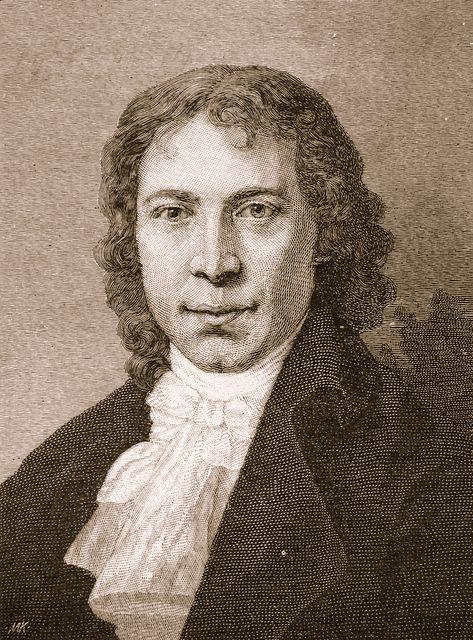
Johann Heinrich Dannecker
 Germany
- Johann Heinrich von Dannecker: A German Sculptor
- Education and Artistic Background
- Early Career and Recognition
- Success in Stuttgart
- Famous Works
- Legacy
Johann Heinrich von Dannecker: A German Sculptor
Johann Heinrich von Dannecker, born in 1758 as the son of a coachman to the Duke of Württemberg, initially trained as a ballet dancer before becoming a sculptor. In 1771, he enrolled in the military school at Solitude Palace near Stuttgart.
Education and Artistic Background
Dannecker received artistic training from sculptors Johann Valentin Sonnenschein and Pierre François Lejeune, as well as painters Adolf Friedrich Harper and Nicolas Guibal. After graduating from the academy with his fellow student Philipp Jakob Scheffauer, Dannecker was appointed as lifelong court sculptor. A ducal scholarship enabled the young sculptors to study in Paris for two years, where they worked in the studio of Augustin Pajou. Subsequently, they traveled to Rome, where they befriended Antonio Canova and Swiss sculptor Alexander Trippel.
Early Career and Recognition
Upon his commission from the Duke of Württemberg, Dannecker created the large-scale allegorical marble sculpture "The Four Seasons" for Hohenheim Palace. This work earned him significant recognition and honorary memberships in the Bologna and Mantua academies. In 1790, he returned to Stuttgart with Scheffauer, receiving the title of Professor at Karlsschule.
Success in Stuttgart
In contrast to Scheffauer, Dannecker quickly established himself in Stuttgart after his return from Rome. Despite limited commissions from the court, he married Henrika Rapp, the daughter of a merchant, and became part of the city's merchant circles. In 1808, he built his own house on the prestigious Palace Square, which housed not only his living quarters but also a workshop, school, and museum.
Famous Works
Among Dannecker's most renowned works from this period are the busts of Schiller (1793 and 1805), his self-portrait (1797), and the clay sketch for "Ariadne on the Panther" (1803), which was later carved in marble (1814).
Legacy
Dannecker's students included Ludwig Mack, Josef Wilhelm Ludwig Mack, Heinrich Max Imhof, and Hans Baur. He is buried in the Hoppenlau Cemetery in Stuttgart.




