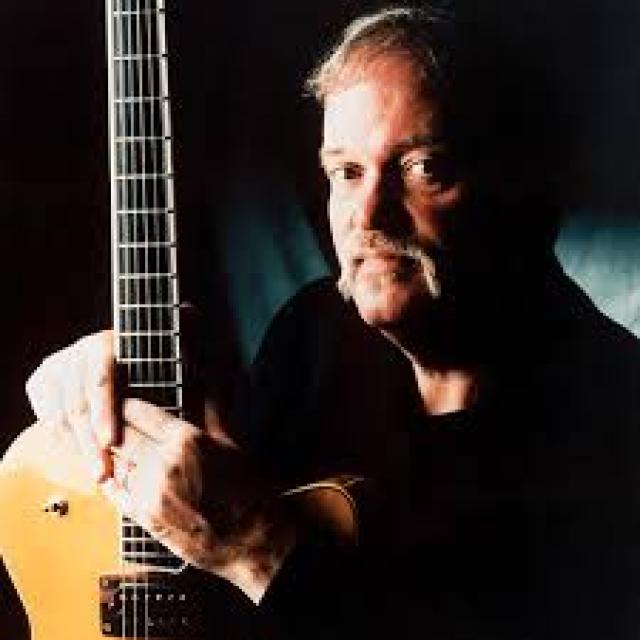
John Abercrombie
 USA
USA- John Abercrombie: A Masterful Jazz Innovator
- Early Influences and Berkeley
- Transition to Jazz
- Artistic Explorations
- Timeless Trio
- ECM Years
- Innovative Techniques
- Legacy and Influences
- Teaching and Later Career
- International Presence and Final Tours
John Abercrombie: A Masterful Jazz Innovator
John Abercrombie is widely recognized as one of the most sophisticated and theoretically knowledgeable guitarists in contemporary jazz. His journey into jazz was gradual and unassuming, yet his impact on the genre has been profound.
Early Influences and Berkeley
Abercrombie's musical beginnings in his teens were rooted in rock-and-roll, but his musical horizons expanded at the prestigious Berklee College of Music in Boston. His academic immersion, combined with performances in local rock bands, laid the foundation for his future endeavors.
Transition to Jazz
After graduating from Berklee, Abercrombie joined organist Johnny "Hammond" Smith's group, gaining invaluable experience on the road and playing at renowned clubs like Count Basie's Lounge and Club Baron in Harlem. His unconventional technique and improvisational approach began to take shape during this period.
Artistic Explorations
Returning to New York City in 1969, Abercrombie faced challenges collaborating with traditional jazz musicians. However, he found support among fellow avant-garde explorers, including the Brecker brothers and Chico Hamilton. His work with Spectrum, Billy Cobham's jazz-rock band, showcased his technical prowess and improvisational flair.
Timeless Trio
Seeking a more refined sound, Abercrombie formed Timeless Trio in 1975 with pianist Jan Hammer and drummer Jack DeJohnette. Their playing was characterized by a softer, more nuanced approach that caught the attention of ECM Records producer Manfred Eicher.
ECM Years
Abercrombie's partnership with ECM led to collaborations with Ralph Towner (Sargasso Sea) and contributions to the groundbreaking Epitaph album, featuring Mingus's posthumous compositions. Notable recordings with Mark Johnson and Peter Erskine showcased his mastery of jazz standards.
Innovative Techniques
In the 1980s, Abercrombie embraced guitar synthesizers, expanding the sonic possibilities of his instrument. His collaborations with diverse musicians, from the Philadelphia String Quartet to saxophonist Michael Brecker, further cemented his reputation as a versatile and innovative artist.
Legacy and Influences
Abercrombie's influence on jazz guitar is immeasurable. He is renowned as both a "classicist" and a "killer" of the genre. Critics have praised his originality and unparalleled harmonic knowledge. His impact is evident in the work of contemporary guitarists like John Scofield and Pat Metheny.
Teaching and Later Career
Abercrombie's passion for jazz history and theory extended into his teaching at Harvard University. He remained a respected and influential figure throughout his career. Despite his European connections and the "European" sound of his ECM recordings, Abercrombie is firmly rooted in the American jazz tradition.
International Presence and Final Tours
Abercrombie's reach extended beyond the United States. In 1998, he embarked on a tour of several Russian cities, accompanied by saxophonist Igor Butman. His music continues to inspire and captivate audiences worldwide, leaving an enduring legacy as one of jazz's most remarkable and diverse guitarists.