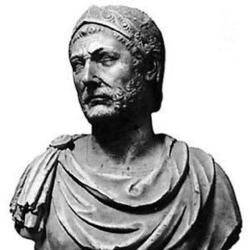
John Acton
 Great Britain
- Lord Acton: A Pioneer in Historical Analysis
- Political Career and Historical Writings
- Academic and Intellectual Legacy
- Posthumous Publications and Death
Lord Acton: A Pioneer in Historical Analysis
Early Life and EducationJohn Emerich Edward Dalberg-Acton, commonly known as Lord Acton, was born in Naples on January 10, 1834. As the only child of Sir Richard Acton and Marie Louise Pellini de Dalberg, he inherited a privileged upbringing. Although he initially attended Ascot College, his formative years were spent in Munich (1850-1854), where he studied under the renowned Catholic historian and theologian, Ignaz von Döllinger. Döllinger instilled in Acton a passion for historical inquiry and a skepticism towards the political ambitions of the papacy.
Political Career and Historical Writings
Despite his Catholic faith, Acton became a vocal critic of certain church authorities through his contributions to various periodicals. These included "The Rambler" (1858-1864), "Home and Foreign Review" (1862-1864), "The Chronicle" (1867-1868), and "North British Review" (1868-1872). Acton's political career saw him serve as a Member of Parliament (1859-1865) and as a peer from 1869 onwards. His support for liberal causes earned him the respect of figures like William Gladstone, who sought his counsel.
Academic and Intellectual Legacy
In 1895, Acton was appointed Regius Professor of Modern History at Cambridge University. His influence on contemporary historians was profound, despite the absence of a single major work to his name. Under his editorship, the first volume of the monumental "Cambridge Modern History" was published in 1903. Acton's famous dictum, "Power tends to corrupt, and absolute power corrupts absolutely," remains an enduring testament to his insights into the nature of power.
Posthumous Publications and Death
After Acton's death in Tegernsee, Germany, on June 19, 1902, his essays and lectures were posthumously published in several collections, including "Lectures on Modern History" (1906), "The History of Freedom and other Essays" (1907), "Historical Essays and Studies" (1907), and "Lectures on the French Revolution" (1910). These works continue to inspire and inform historians to this day.