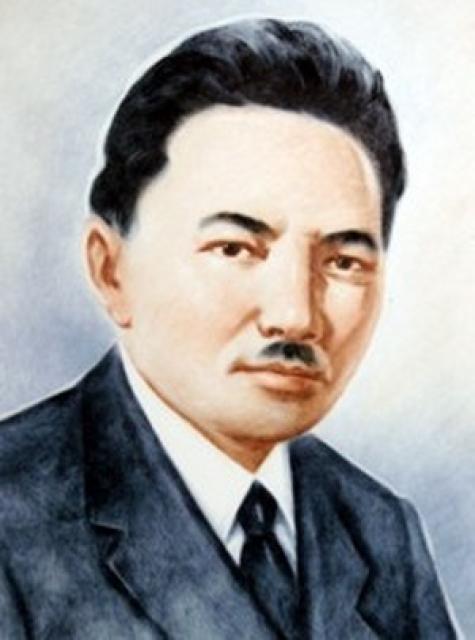
Jusibek Aimautov
 Kazakhstan
Biography of Zhussipbek Aymauytov
Zhussipbek Aymauytov was a writer, scholar, educator, psychologist, and enlightener. He is considered to be the founder of drama and novels in the Kazakh language. Aymauytov was born in 1889 in the Bayan-Aulsky district of the Pavlodar region. He passed away in 1931. Aymauytov faced a difficult fate, enduring constant suspicions, false accusations, and persecution from the authorities. He faced hardships in obtaining an education and expressing his creativity. Sadly, his legacy was nearly erased from Kazakh cultural history and was gradually pieced together after being forgotten for a long time. Fragments of his correspondence with Kopeev have been preserved.
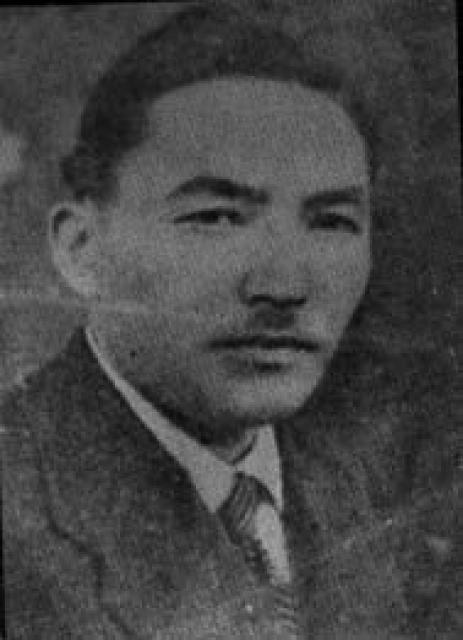
Despite the challenges he faced, Aymauytov continued to create incessantly. He learned various crafts from his father and the local mullah until the age of 15. He then became a mullah himself and taught children. At the age of 18, Aymauytov spent one winter in a Russian school and two months in the state agricultural school in Kerekeu, where he was expelled for rebelling against an unjust school regime. After working as a teacher in his village for two years and studying at the Russian-Kazakh school in Kerekeu, he enrolled in the Semipalatinsk Teacher's Seminary in 1914 and graduated in 1919. It was during his time at the seminary that he met K. Satpayev and M. Auezov.
While attending the seminary and working to support himself, Aymauytov did not shy away from any job. He worked as a blacksmith, carpenter, joiner, shoemaker, and even made dombras (a traditional Kazakh musical instrument), which he played and composed songs for. He began writing poetry at the age of 13. His second phase of literary activity began when he was 19-20 years old. He was first published in 1913 in the newspaper "Kazak". In 1916, he wrote a play about sending Kazakhs for rear work. In 1920, he worked as the head of the education department in the Semipalatinsk province, editor of the newspaper "Kazak til", and as an educator in schools (Karkaraly), institutes (Orenburg, Tashkent), and technical schools (Shymkent). In 1929, he moved to Kyzyl-Orda to work for the newspaper "Enbekshi Kazak", but he was arrested. In 1926, he faced accusations of embezzling donations intended for the famine-stricken regions of Turgay, Kustanai, and Aktobe, but managed to prove his innocence.
Aymauytov was subjected to anonymous accusations and open defamation. In 1929, G. Togzhanov published an article titled "Zhussipbek", calling him a slanderer, a false artist, and a political "counter-revolutionary". He was later accused of being a member of an illegal counter-revolutionary organization. In April 1931, Aymauytov was executed. He had two sons from his first marriage.
Aymauytov is recognized as the pioneer of the novel and drama genres in modern Kazakh literature. He initially began his literary career with newspaper articles, songs, stories, satirical essays, and critical notes. In 1918, he and Auezov co-published the journal "Abai". Here, Aymauytov published a remarkable story about Amr Kashaubayev, depicting him as an outstanding singer and a man of high culture. Aymauytov was an initiator of the performing arts. He directed his own plays on the Kazakh stage and participated in various theatrical productions. He also played the domra and sang. He began writing plays in 1916. Aymauytov organized the first theater groups and was actively involved in their performances. On December 17, 1917, he staged his play "Rabiga" in Semipalatinsk. One of his notable dramatic works, "Sherniyaz" (1925-1926), dedicated to the memory of Sultanmahmut Toraygirov, explores the relationship between the city and the village. Aymauytov also staged the play "Birzhan and Sara" in Semipalatinsk, where he played the role of Birzhan.
"Kartkozha" (1926) was the first novel written in the Kazakh language. It portrays the horrors that Kazakhs had to endure during the civil war in the novel "Akbilek". The intense conflicts that erupted in Russia also affected the peaceful Kazakh lands. Crushed by Tsarist gendarmes and soldiers, the Kazakhs lost their sense of direction, not distinguishing between friends and enemies, reds and whites, and became victims of violence. Through the fate of the novel's heroine, Aymauytov portrayed the tragedy of the Kazakh people, characterized by submissiveness, humility, and crushed aspirations in the face of relentless historical events. Aymauytov's last work, "Kunekaydin Zhazygy" ("The Guilt of Kunekay"), also explores women's issues, specifically the clash between dignity and injustice. As a critic, Aymauytov published an article titled "After-Abay Poets" in the journal "Abay", in which he linked the growth of the literary movement and literature as a whole to the awakening of national self-consciousness. He believed that the awakening of national self-consciousness was rooted in the work of Abay, the newspaper "Kazak", and the spiritual development of a nation turning towards science and education. Like Abay, Aymauytov motivated young people to think and strive for self-improvement with every word he wrote.




