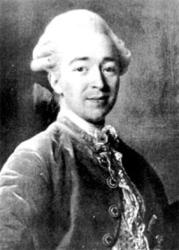
John Edward Herbst
 USA
USA- Ambassador John Herbst: A Diplomatic Trailblazer
- Diplomatic Assignments
- U.S. Ambassador to Uzbekistan
- U.S. Ambassador to Ukraine
- Coordinator for Reconstruction and Stabilization
- Afghanistan
- Interagency Management System
- Australia-U.S. Memorandum of Understanding
- National Defense University Center for Complex Operations
Ambassador John Herbst: A Diplomatic Trailblazer
Early Career and EducationJohn Herbst, a renowned American diplomat, embarked on his diplomatic career in 1979. Prior to that, he earned a Bachelor of Science in Foreign Service from Georgetown University's School of Foreign Service in 1974 and a Master of Arts in Law and Diplomacy from the Fletcher School of Law and Diplomacy at Tufts University in 1978. He also studied at the School of Advanced International Studies in Bologna, Italy, under the auspices of Johns Hopkins University.
Diplomatic Assignments
Herbst initially served as a political counselor at U.S. embassies in Tel Aviv, Moscow, and Riyadh. He also held positions as Director for Regional Affairs in the U.S. State Department's Near East Bureau, Director of the Office of Independent States and Commonwealth Affairs, and First Deputy Chief of Mission for Special Assignments for the New Independent States. From 1997 to 2000, he served as the U.S. Consul General in Jerusalem.
U.S. Ambassador to Uzbekistan
In February 2000, Herbst was nominated by President Clinton as U.S. Ambassador to Uzbekistan. The Senate confirmed his nomination on September 8. Ambassador Herbst arrived in Tashkent on October 28, 2000, and presented his credentials to President Islam Karimov on November 1, 2000.
As U.S. Ambassador to Uzbekistan in the early stages of Operation Enduring Freedom, Herbst assisted in establishing critical base access. Following the September 11th attacks, Uzbekistan became a significant location for the United States due to its proximity to Afghanistan and became a strategic ally in the war on terror. Leasing the Karshi-Khanabad Air Base for support of the mission against Al-Qaeda was a key aspect of his tenure. His British counterpart, Craig Murray, who served in Uzbekistan from 2002 onward, wrote about his encounters with Herbst in his 2006 memoir, "Murder in Samarkand: A British Ambassador's Controversial Defiance of Tyranny in the War on Terror."
Ambassador Herbst represented U.S. assistance to the Uzbekistani government and facilitated several changes in the country, including granting the International Committee of the Red Cross access to Uzbekistani prisons. He also supported the formation of a non-governmental organization focused on human rights in the country. Herbst was involved in reforming the judiciary system, and during his time, prosecutions were launched against two security officials who had abused their power while working in a Uzbekistani prison.
Global Partnership Against the Spread of Weapons and Materials of Mass Destruction
On April 23-24, 2002, Ambassador Herbst attended an international conference in Moscow to cultivate international support for the Global Partnership Against the Spread of Weapons and Materials of Mass Destruction. At the conference, Ambassador Herbst handed Ukrainian Foreign Minister Konstantin Grishchenko a letter from Undersecretary of State for Arms Control and International Security John Bolton. The letter urged Ukraine to support the Global Partnership. The letter also addressed nonproliferation topics agreed upon at the 2002 G8 Summit.
U.S. Ambassador to Ukraine
Testifying before the U.S. Senate Committee on Foreign Relations on June 18, 2003, Herbst stated: "I have devoted much of my career in preparation for this particular posting. About half of my 24 years in the Foreign Service have been spent working in the former Soviet Union and its successor states. From 1994 to 1997, I worked on a wide range of issues with the Government of Ukraine, including Ukraine's NATO aspirations." He arrived in Kiev on September 13.
During his time in Ukraine, the Orange Revolution unfolded, and Ambassador Herbst was closely involved in the events leading to Viktor Yushchenko's ascendancy to power and heavily influenced his presidency. Herbst was described by the Daily Times as "a patrician, charming and linguistically gifted diplomat" who managed "to sell Bush administration's policy that Ukraine should not join a single economic space with Russia, Belarus and Kazakhstan" because "it is not in [its] interest to have this kind of integration."
In 2005, Ambassador Herbst characterized the reputation of Ukrainian Interior Minister Nikolai Bilokony, who had served in the administration since 2003, as "unacceptable." That same month, Ambassador Herbst worked with newly-appointed Ukrainian Interior Minister Yuriy Lutsenko to reform the ministry. The revamped ministry was restructured to reflect the changed political and socio-economic environment in Ukraine. During the meeting, Ambassador Herbst offered the support of U.S. law enforcement and noted that the United States stood ready to assist the Ukrainian Ministry of Internal Affairs.
Following the Orange Revolution, Ambassador Herbst advocated for the funding of news outlets in Ukraine. His efforts resulted in the U.S. Agency for International Development allocating $2.4 million to foster media development in the country. Herbst implemented his strategy by focusing on the training of communication trainers and educators, including at the Ukrainian Center for Reform of Ukrainian Education and Kiev-based NGO Telekritika. Herbst oversaw third-party funding of organizations such as Open Media Fund, supported by the International Renaissance Foundation, and worked with his supporters in the U.S. Embassy, including Public Affairs Officer Brent Byers, to provide $750,000 in funding in 2005. Ambassador Herbst oversaw funding to support "independent" media in Ukraine. Herbst coordinated with the European Commission in Ukraine and secured an additional €3.5 million between 2003 and 2005.
In January 2004, he met with Metropolitan Volodymyr (Sabodan) of Kiev and All Ukraine. In April 2006, "as a result of a telephone conference between archbishops of the ROCOR, John Herbst was recognized as a delegate from the Odessa Diocese to the IV All-Foreign Council."
Coordinator for Reconstruction and Stabilization
In the summer of 2006, Ambassador Herbst assumed the position of Coordinator for Reconstruction and Stabilization. During his tenure, Ambassador Herbst established the Civilian Response Corps, which recruited over 1,000 members, and oversaw its missions in countries such as Sudan, Chad, Haiti, Lebanon, Kosovo, Iraq, and Afghanistan. Under Herbst's leadership, the Civilian Response Corps and the Office of the Coordinator for Reconstruction and Stabilization provided support to over 20 U.S. embassies. His responsibilities included planning and coordinating to prevent conflict and transition to sustainable stabilization solutions in countries at risk or engaged in conflict. Herbst was particularly successful in building interagency support and employing the concept of "smart power" through policy committees and coordinating groups involving individuals from USAID, the Departments of Justice, Commerce, Agriculture, Homeland Security, Health and Human Services, and the Treasury.
Afghanistan
In Afghanistan, Ambassador Herbst led the Civilian Response Corps in its civilian surge, providing nationwide expertise and building Afghan capacity at the central and provincial levels. His team enhanced civil-military cooperation, beginning with the Kabul-based civil-military group, managed plans to integrate U.S. efforts in Afghanistan, and authored the Civil-Military Campaign Plan for the operations of twelve U.S.-led provincial reconstruction teams.
Interagency Management System
In the interest of greater coordination among interagency actors, John Herbst developed the Interagency Management System. In his remarks on "Irregular Warfare" and "Stabilization Operations": Approaches to Interagency Integration, given before the Subcommittee on Oversight and Investigations with the Subcommittee on Terrorism and Unconventional Threats and Capabilities of the Committee on Armed Services, Ambassador Herbst elaborated on how the system was created in response to ongoing challenges and to synchronize and operate in tandem with the strategic plan. Identified in Presidential National Security Directive 44 as a complex and arduous undertaking, coordination among agencies had been an impediment, so Herbst and the Office of the Coordinator for Reconstruction and Stabilization had to manage expectations and exercise patience, but it proved successful in numerous countries.
Ambassador Herbst connected the Interagency Management System with the Goldwater-Nichols Act, saying: "I think the Interagency Management System under the President's National Security Directive 44 is somewhat analogous to Goldwater-Nichols. It's a Presidential National Security Directive, and our agreement on how we implement that has established interagency coordination that has not been there in the past." In the short term, Ambassador Herbst saw the Interagency Management System as a way to immediately address the challenges facing Iraq by coordinating with the military in a way that engaged civilians and interagency counterparts. He outlined the implications for future engagements in Afghanistan and envisioned a way to avoid duplicative efforts and achieve unity of effort across command structures.
Australia-U.S. Memorandum of Understanding
In October 2009, Australian Prime Minister Kevin Rudd announced the creation of the Australian Civilian Corps at the East Asia Summit in Thailand. In order to cooperate and build on the capacities of both the Office of the Coordinator for Reconstruction and Stabilization and the Australian Civilian Corps, Herbst coordinated the signing of a Memorandum of Understanding. The memorandum outlines how the two organizations will share lessons learned and effectiveness measurement methodologies in order to advance conflict prevention and recovery and stabilization goals. The memorandum focuses on building a lasting peace through enhancing engagement between civilian reconstruction and stabilization organizations and strengthening civilian capacity worldwide. The memorandum was due for review in 2013.
National Defense University Center for Complex Operations
In July 2010, Herbst was appointed Director of the National Defense University Center for Complex Operations. As Director, John Herbst applied his insights gained over 30 years as a diplomat to advance the careers of professionals who will shape the next generation of national defense practitioners. As an esteemed expert, Ambassador Herbst provided leadership to students and faculty at National Defense University, effectively continuing the Center for Complex Operations