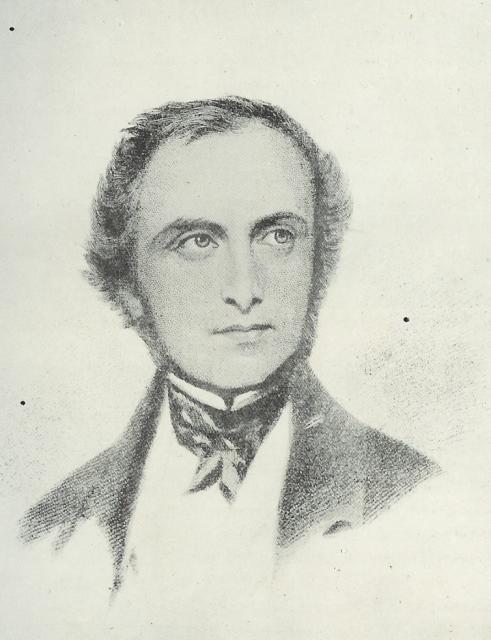
John Elliot Drinkwater Bethune
 India
IndiaJohn Elliot Drinkwater Bethune: A Pioneer in Women's Education in India
John Elliot Drinkwater Bethune was an English lawyer, civil servant, and member of the Council of the Governor-General of India. Born in 1801 in Ealing, London, he was the son of Colonel John Drinkwater Bethune, a famous author known for his book 'History of the Siege of Gibraltar'.
Bethune was an exceptional student, attending Westminster School and graduating with honors from Trinity College, University of Cambridge. After passing the legal examination, he obtained the right to hold administrative positions in Parliament. He was fluent in Greek, German, French, Italian, Latin, and was also a renowned poet.
In 1848, Bethune was sent to India as a lawyer for the Council of the Governor-General. Despite spending only three years there, he made a significant impact on history. During this time, the first schools for Indian girls were opened in North Calcutta in 1819. However, families from higher social classes and radical Hindus were reluctant to send their daughters to school, viewing education for women as sinful due to the schools' primary goal of spreading Christianity.
To address this issue, Bethune founded a secular school for Indian girls, known as the Native Female School, in Kolkata in 1849. This was the first of its kind in Kolkata and had a profound influence on society. In 1856, the school came under government administration and was renamed Bethune School in 1862-1863. Bethune generously donated all his movable and immovable property to the school.
Although the school received support from liberal-minded Indians, it did not gain widespread public support. In 1868, when the school's headmistress included the study of Christianity in the curriculum, she was forced to resign. It was only at the end of the 19th century that prejudice against women's education began to diminish.
Bethune was closely associated with the Calcutta Public Library and engaged in translating works into Bengali. He published a treatise on women's education written by Pandit Gour Mohan Vidyalankar and distributed it at his own expense. In 1849, shortly after assuming his role as a lawyer in the Governor-General's Council, Bethune drafted a proposal to transfer British subjects under the jurisdiction of the British East India Company. However, strong opposition from Europeans prevented the further progress of the proposal.
Bethune also expressed his opinion on the use of English in literature. When Michael Madhusudan Dutt, a future prominent Bengali poet, published his English poetry collection 'Captive Lady', Bethune believed it was foolish for foreigners to attempt writing poetry in English and suggested focusing such talent on local languages instead.
John Elliot Drinkwater Bethune's contributions as a lawyer, civil servant, and pioneer in women's education in India have left a lasting impact on society. His efforts paved the way for the advancement of women's education in the country.


