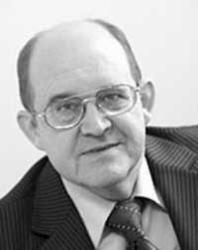
John Ernst Steinbeck
 USA
- Salinas and the Road to Writing
- The California Books
- Ed Ricketts and the Wider World
- East of Eden and Later Work
- Politics, Family and Final Years
- Legacy
John Steinbeck turned the farms, migrant camps and coastal towns of California into some of the most enduring settings in American literature. Born in Salinas on 27 February 1902, he wrote with unusual force about people living on society’s margins: itinerant workers, poor families, outsiders and dreamers. His novels Of Mice and Men, The Grapes of Wrath and East of Eden brought him international recognition, but the political anger they stirred and the questions critics raised about his later work kept his reputation contested as well as celebrated.
Salinas and the Road to Writing
Steinbeck was the only son and third of four children of John Ernst Steinbeck, a county official and businessman, and Olive Hamilton, a former teacher. He grew up in the Salinas Valley, surrounded by fertile fields, dry hills and the Pacific coast. The landscape and agricultural life became more than scenery in his writing: they shaped his sense of how people depended on land, work and one another.
He graduated from Salinas High School in 1919 and attended Stanford University intermittently from 1919 to 1925. He took courses that interested him, especially literature, writing and science, but left without a degree. In between, he worked as a farm laborer, ranch hand, factory worker and sales clerk. These jobs exposed him to the precarious lives of working people and gave him material that would later reappear in his fiction.
His first novel, Cup of Gold, appeared in 1929, but it found little audience. The Pastures of Heaven and To a God Unknown followed, also without securing financial stability. He continued to write while doing practical work, including a period as a caretaker near Lake Tahoe. In 1930 he married Carol Henning, who became an important reader and editorial collaborator during his early success.
The California Books
Steinbeck’s fortunes changed with Tortilla Flat in 1935, a comic novel about a community of Monterey paisanos living on the edge of conventional society. Its success gave him the security to focus more fully on writing. He turned toward the hardships of farm labor and industrial agriculture in In Dubious Battle (1936), a novel about a strike, and Of Mice and Men (1937), a tightly constructed story of two itinerant workers whose hopes for a small farm collide with the limits of their circumstances.
He reached a new level with The Grapes of Wrath in 1939. The novel follows the Joad family as the Dust Bowl and economic crisis force them from Oklahoma toward California, where they confront exploitation, hunger and unstable work. Steinbeck drew on reporting about displaced families and the conditions they faced. Carol helped edit the manuscript, and the book’s vivid account of migrant life quickly became a national event.
The praise was matched by fierce hostility. Agricultural groups called the novel false and inflammatory; critics and politicians accused it of communist propaganda. Kern County, California, banned it from its public libraries, and copies were publicly burned. The controversy made Steinbeck a target of threats, but it also made the book a bestseller. In 1940, The Grapes of Wrath won the Pulitzer Prize for Fiction and the National Book Award.
The novel’s success did not make Steinbeck a simple political spokesman. He resisted being treated as a partisan writer, even as his work’s sympathy for laborers and the poor drew political scrutiny. Declassified records show that the FBI retained files and information about his political associations, although the bureau later stated that he had never been the subject of an investigation.
Ed Ricketts and the Wider World
In 1930 Steinbeck met marine biologist Edward F. Ricketts, beginning an eighteen-year friendship that profoundly influenced his thinking. Ricketts ran a biological laboratory in Monterey and introduced Steinbeck to tide-pool ecology, patient observation and a holistic view of living systems. Their 1940 voyage through the Gulf of California produced Sea of Cortez, a combination of travel narrative, natural history and philosophical reflection. Steinbeck later wrote about Ricketts in a tribute published with The Log from the Sea of Cortez.
Ricketts also inspired the character Doc in Cannery Row (1945), a novel set among Monterey’s cannery workers and marginal residents. After Ricketts died in a 1948 traffic collision, Steinbeck felt the loss deeply. Their friendship and the Monterey community shaped some of his most affectionate writing.
During World War II, Steinbeck supported the war effort through books and screen work, including The Moon Is Down and Bombs Away. He also reported from Europe and North Africa for the New York Herald Tribune. After the war, he published The Pearl, a parable about a poor fisherman whose discovery of a valuable pearl brings danger rather than freedom, and A Russian Journal, made with photographer Robert Capa after their travels in the Soviet Union.
East of Eden and Later Work
In 1952 Steinbeck published East of Eden, an ambitious novel that combines the history of the Salinas Valley with the fictional stories of the Trask and Hamilton families. He described it as a work rooted in family history, and its central struggle between good and evil draws on the biblical story of Cain and Abel. Later works included Sweet Thursday, The Winter of Our Discontent and Travels with Charley, a record of his 1960 journey across the United States with his dog.
Steinbeck received the Nobel Prize in Literature in 1962. The Swedish Academy honored his realistic and imaginative writing, especially its sympathetic humor and social perception. The award brought renewed attention but also exposed disagreement about his place in the literary canon. Some reviewers argued that the Nobel recognized a writer whose strongest work belonged to the 1930s; others saw his novels as an essential portrait of American life. Steinbeck himself had long been sensitive to hostile reviews, and the debate around the prize reinforced his complicated relationship with critics.
Politics, Family and Final Years
Steinbeck married three times. His marriage to Carol Henning ended in divorce in 1943. That year he married singer Gwyndolyn “Gwyn” Conger, with whom he had two sons, Thom and John. They divorced in 1948. In 1950 he married Elaine Scott, who remained his wife until his death. His family life, particularly the experience of fatherhood and separation from his sons, informed parts of East of Eden and his letters.
In the 1960s, Steinbeck’s political views became a source of new controversy. He initially questioned aspects of U.S. involvement in Vietnam, then became a strong public supporter of American troops and the war effort. From December 1966 to 1967, he reported from Southeast Asia for Newsday, writing dispatches that often defended U.S. policy and challenged antiwar critics to see the conflict firsthand. His position sharply diverged from that of many writers and readers who had associated him with social protest. He also privately asked President Lyndon B. Johnson to ensure that his son, serving in Vietnam, would not be kept away from combat; the request later became a focus of debate about his political judgment and family loyalty.
Steinbeck received the Presidential Medal of Freedom in 1964. He died in New York City on 20 December 1968, aged 66, after years of declining health.
Legacy
Steinbeck’s work is still read for its memorable characters and clear-eyed attention to power, poverty and human dignity. The Joads’ journey, George and Lennie’s fragile dream, and the Trask family’s search for moral choice continue to shape how readers imagine the Great Depression and California. His career also resists a neat summary: he was a celebrated chronicler of the dispossessed who later supported a deeply divisive war, and a Nobel laureate whose work remained under debate. That tension has kept his writing alive in classrooms, libraries and arguments about what a novelist owes to the world around him.