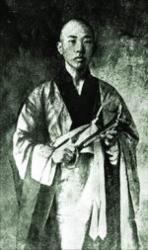
Fedor Samohin
- Early Life and Career
- Wartime and Journalistic Career
- Literary Career
- Wartime Themes
- Other Works and Legacy
Early Life and Career
Born in 1918 in the village of Verkhne-Sadovskoye, Soviet writer Fedor Ivanovich Samokhin began his working life as an accountant in a collective farm in 1934. After graduating from Nizhne-Chirskaya Secondary School in 1940, he served as a senior accountant at the Nizhne-Chirskaya Fish Market from 1940 to 1942.
Wartime and Journalistic Career
During the Great Patriotic War, Samokhin served as a member of the bureau of the Nizhne-Chirskaya district committee of the Komsomol (Young Communist League) and as a scout in the partisan detachment "Death to Fascism." Severely wounded in action, he was sent to Moscow in 1944 to attend newspaper worker courses by the Stalingrad Regional Committee of the Komsomol. After joining the CPSU (Communist Party of the Soviet Union), Samokhin worked as a literary staff member for the newspaper "Komsomolskaya Pravda."
From 1946 to 1949, he held various positions at the newspaper "Leninskaya Smena" in Almaty and as a special correspondent for the Dzhambul regional newspaper "Kommunist." In 1949, he moved to the capital of Kyrgyzstan, Frunze (now Bishkek), where he worked at the newspaper "Komsomolets Kirgizii" as a literary correspondent and head of the editorial department until 1961.
Literary Career
Samokhin's literary career began with publications in newspapers. He became responsible secretary and later editor of the Nizhne-Chirskaya district newspaper "Kolkhoznik Dona" after the liberation of the area from German occupation. His early short stories, "On the Riffles," "Accordeon," and "Farewell," were published in this newspaper.
Samokhin's professional writing career began in 1949 with his work at "Komsomolets Kirgizii." Despite losing both legs in the war, he traveled extensively throughout Kyrgyzstan, meeting people from various walks of life. His experiences inspired works such as the novels "My Father's House," "Three Islands," "Motherland, I Will Return!" and the romance novel "Chuy's Spills."
Wartime Themes
One of the central themes in Samokhin's work was the heroism of Soviet people during the Great Patriotic War. His first literary piece on this topic was the short story "Scout Klavdia Panchishkina" (1952) about a fighter in the Lower Chirskaya district partisan detachment.
His most notable work on this theme is the novella "Cholponbay," dedicated to Hero of the Soviet Union Cholponbay Tuleberdiev. It received several reissues and critical acclaim, including from literary critic and member of the National Academy of Sciences of the Kyrgyz Republic Tendik Askarov.
Other Works and Legacy
Samokhin's other works on wartime themes include the novellas "Boy from Stalingrad" and "Don - Partisan River." He also wrote numerous essays, one of which, "By the Blood of the Heart," was published in the collection of works by Kyrgyz writers "Heroes of the Harsh Years."
In honor of his 60th and 70th birthdays, the publishing house "Kyrgyzstan" released collections of Samokhin's best stories and novels, showcasing his themes of love for his homeland and his people. He also participated in the translation and publication of the collection of works by Kyrgyz frontline writers "Zveni, Komuz!" (1985).
Samokhin's literary legacy is marked by his love for his native land and his unwavering belief in the human spirit. He died on July 17, 1992, in Bishkek, and was honored with three Honorary Certificates of the Presidium of the Supreme Soviet of the Kyrgyz SSR for his contributions to literature and his role in promoting Kyrgyz Soviet literature.