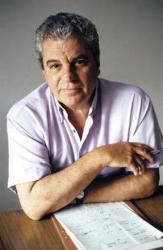
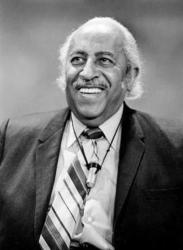
John Fowles
 Great Britain
- John Fowles: A Renowned British Writer and Novelist
- Early Life and Education
- Career and Influences
- Later Life and Works
John Fowles: A Renowned British Writer and Novelist
John Robert Fowles was a renowned British writer, novelist, and essayist. His work is often regarded as a transitional phase between modernism and postmodernism, with influences from Jean-Paul Sartre and Albert Camus. According to The Times, Fowles is among the 50 greatest British writers since 1945.

Early Life and Education
Fowles was born on March 21, 1926, in Leigh-on-Sea, a small coastal town in Essex, England. His parents belonged to the middle class, and his father, a World War I veteran, had to take over his father's tobacco trading company to support their large family. Fowles grew up with his mother and his cousin Peggy Fowles, who became his nanny, playmate, and friend for the first ten years of his life. He attended a primary school in Essex and developed a love for children's books by Richard Jefferies. Fowles was the only child until he turned sixteen.

Career and Influences
In 1939, Fowles became a student at Bedford School, located two hours away from his home. His schooling coincided with the outbreak of World War II. He excelled academically and was a talented athlete, playing rugby and cricket. After completing school in 1944, Fowles underwent naval training at the University of Edinburgh to join the Royal Marines. However, he finished his training on May 8, 1945, and instead served for two years at a military base in Devon.
In 1947, Fowles was demobilized and went to Oxford, where he studied French and first contemplated becoming a writer under the influence of French existentialists. Although he never identified himself as an existentialist, he shared their perspective that the world is absurd. After graduating from Oxford University, Fowles taught English on the Greek island of Spetses. His time on the island inspired him to write the novel "The Magus" (1966), which became an instant bestseller due to its anarchic appeal to the counterculture of the 1960s and its exploration of experimental philosophy.
Later Life and Works
Fowles followed "The Magus" with "The French Lieutenant's Woman" (1969), a Victorian-style romance intertwined with postmodern irony set in Lyme Regis, Dorset, where he spent a significant portion of his life. Some of his later works include "The Ebony Tower" (1974), "Daniel Martin" (1977), "Mantissa" (1982), and "A Maggot" (1986).
Fowles' books and essays have been translated into many languages, and several have been adapted into films. He lived in Greece for a significant period of time, where he met his future wife Elizabeth Christy, who was married to his colleague Roy Christy at the time. Fowles wrote poetry and engaged in conversations with other foreigners during his time in Greece. However, due to educational reforms in 1953, Fowles and his colleagues lost their teaching positions. He returned to England in 1953.
By this time, Elizabeth's marriage had ended, and after Fowles' return to England, they reconnected. They married on April 2, 1954, and Fowles became a stepfather to Elizabeth's daughter from her previous marriage. For about ten years, Fowles taught English to foreign students in London, until the exceptional success of his first published novel, "The Collector" (1963), allowed him to fully dedicate himself to literature. In 1965, he and his wife left London in search of a quieter and more secluded place to work. They lived on a farm in Dorset for a while before settling in Lyme Regis, which became their home until the end of their lives.
Fowles' interest in history led him to become a curator of the local museum from 1979 to 1988. He stepped down from his position after suffering a stroke that affected his health. After Elizabeth's death in 1990, Fowles remarried. Sarah Fowles was by his side when his heart stopped on November 5, 2005.