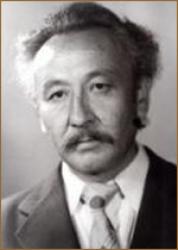
John Grierson
 Great Britain
- John Grierson: Father of British Documentary Film
- Early Life and Education
- The Birth of Documentary Film
- Contributions in the UK and Canada
- Exile and Return
John Grierson: Father of British Documentary Film
John Grierson was a Scottish filmmaker and documentarian known as the father of British and Canadian documentary cinema. He is widely recognized for coining the term "documentary" in 1926 to differentiate it from fictional films. In 1972, the Grierson Award was established in his honor, recognizing outstanding documentaries in nine categories.

Early Life and Education
Grierson was born on April 26, 1898, in Deanston, Scotland. His parents instilled in him liberal principles, humanist ideals, and Calvinist morality. They emphasized the importance of education for personal empowerment and saw meaningful work as a way to serve God.

After serving in the Royal Navy during World War I, Grierson attended the University of Glasgow. As a leftist sympathizer, he actively participated in political debates. In 1924, he graduated with degrees in English and Moral Philosophy and received a Rockefeller scholarship to study in the United States.
The Birth of Documentary Film
Grierson's research in psychology and propaganda during his time in Chicago, Columbia, and Wisconsin-Madison ignited his interest in the influence of media on public opinion. While working for the New York Sun as a film critic, he argued that cinema could be a tool for addressing social issues and fostering national identity.
In England, Grierson joined the Empire Marketing Board, where he began experimenting with filmmaking in the service of government propaganda. In 1929, he released "Drifters," his first documentary, depicting the hardships faced by North Sea fishermen.
Contributions in the UK and Canada
Grierson oversaw the production of several groundbreaking documentaries for the EMB and later for the General Post Office, including "Night Mail," "Coal Face," and "The Song of Ceylon." However, he became increasingly frustrated by bureaucratic constraints.
In 1938, he accepted an invitation from the Canadian government to establish a national film board. The National Film Board of Canada, which Grierson directed, produced war propaganda during World War II and, after the war, focused on documentaries reflecting Canadian life.
Exile and Return
In 1945, Grierson was dismissed from his post over alleged communist sympathies and returned to Scotland. He hosted the successful television program "This Wonderful World" from 1957 to 1967 and received a special Canadian Film Award in 1957. John Grierson passed away on February 19, 1972, at the age of 73.