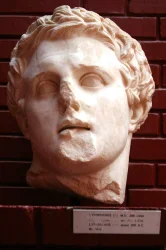
John II Komnenos
- Born into an imperial dynasty
- Securing the throne
- Campaigns on several fronts
- Diplomacy, court and church
- A sudden death and a clear successor
- Legacy
John II Komnenos spent much of his reign on campaign, working to restore Byzantine influence across Anatolia, the Balkans and the eastern Mediterranean. Remembered as a disciplined and capable ruler, he inherited an empire rebuilt by his father, Alexios I, then pressed its frontiers outward while managing an ambitious court and a family whose members could be rivals as well as allies.
Born into an imperial dynasty
John was born in Constantinople on 13 September 1087, the eldest son of Emperor Alexios I Komnenos and Irene Doukaina. Known as a “purple-born” prince, he was raised within the court and designated as his father’s successor. In 1104 he married Piroska of Hungary, later known in Byzantium as Irene. Their marriage tied the imperial household to one of the region’s major kingdoms and produced several children, including the future emperor Manuel I.
Securing the throne
When Alexios died in 1118, John took power amid tension within his own family. His mother Irene and his sister Anna Komnene had favored other arrangements for the succession, and Anna’s husband Nikephoros Bryennios had been a potential candidate. John moved quickly to establish control of the palace and the capital. Although the transition was contested, he secured the throne and would rule for nearly twenty-five years.
Campaigns on several fronts
John’s reign was marked by repeated military expeditions. In western Anatolia, campaigns against Turkish powers recovered important towns and strengthened Byzantine routes to the coast. In the Balkans, he confronted Pecheneg incursions and conflicts involving Serbia and Hungary. His victories at Beroia in 1122 and subsequent campaigns helped reinforce imperial authority in the region.
In 1137, John turned toward Cilicia, defeating Armenian forces and bringing the region under Byzantine control. He then pressed on to Antioch, where Prince Raymond accepted Byzantine overlordship. These campaigns displayed the empire’s renewed strength, though keeping control of distant territories required constant negotiation and further military pressure. John’s ambitions in Syria remained unfinished when he died.
Diplomacy, court and church
The emperor combined warfare with diplomacy, seeking alliances with western rulers and asserting Byzantium’s status among the Christian powers. His relations with the crusader states were often uneasy: they needed Byzantine assistance but resisted the emperor’s claims to authority. John’s plans for a major expedition into the Holy Land suggested how far he hoped to extend imperial influence.
At home, he cultivated an image of personal restraint and duty. His court supported literary activity, while he and Empress Irene founded the monastery of Christ Pantokrator in Constantinople, a major religious complex that included a hospital and charitable services. Its scale reflected both dynastic ambition and the couple’s desire to secure spiritual remembrance.
A sudden death and a clear successor
In 1143, while campaigning in Cilicia, John was wounded in a hunting accident by an arrow. The wound became fatal, and he died on 8 April. Some later accounts suggest that poison may have been involved, but the circumstances remain debated. Before his death, John chose his younger son Manuel over his surviving older son Isaac as successor. Manuel was acclaimed emperor, continuing the Komnenian dynasty.
Legacy
John II’s reign strengthened Byzantine military and diplomatic standing after the political and territorial crises of the preceding century. His steady campaigns, personal leadership and charitable foundations left a substantial mark, even though many of his gains depended on continued imperial attention. Often overshadowed by his father Alexios and son Manuel, John is now recognized as one of the most capable emperors of the Komnenian era.