John Paul Getty Jr.
 USA
USA- Biography of John Paul Getty Jr.
- Becoming a British Philanthropist
- Early Life and Marriages
- Trials and Philanthropy
- Legacy
Biography of John Paul Getty Jr.
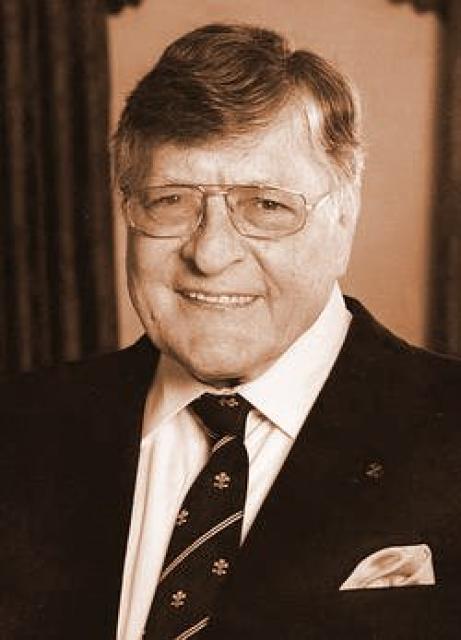
John Paul Getty Jr. was a wealthy British philanthropist and collector of rare American books. He was born on September 7, 1932, as Eugene, in the fourth marriage of his father, Jean Paul Getty, one of the richest individuals on the planet, to Ann Rork. The Getty family's wealth came from the oil business founded by John's grandfather, George Franklin Getty. Throughout his adult life, John Paul Getty Jr. changed his name several times, going by Paul Getty, John Paul Getty, Jean Paul Getty Jr., and John Paul Getty II.
Becoming a British Philanthropist
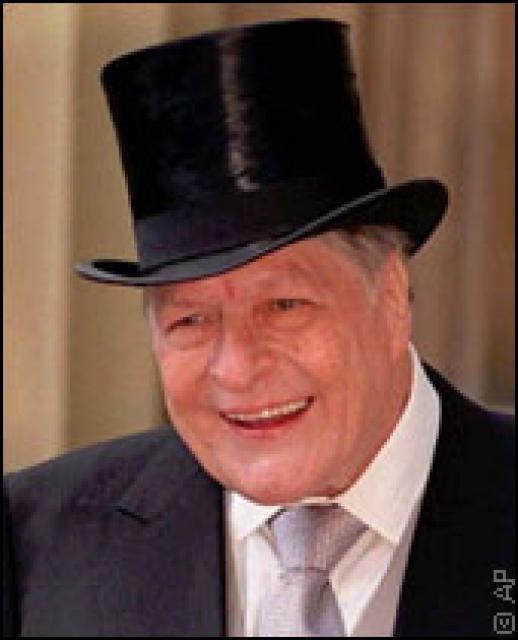
Following in his father's footsteps, John Paul Getty Jr. became known for his affinity for all things British, although he obtained British citizenship only in 1997. In 1986, he was honored with a knighthood for his contributions to cricket, a sport he loved despite his American origins, as well as for his contributions to the arts and the Conservative Party. The honorary knighthood became effective when Getty acquired British citizenship. In 1998, he again changed his name, wishing to be known as Sir Paul Getty, KBE.
Early Life and Marriages
Getty attended a private Catholic school and the University of San Francisco but did not complete his studies. Instead, he joined the army and served in Korea. He was married three times in his life. His first wife was Abigail Harris, a former water polo champion, with whom he had four children - two boys and two girls. They divorced in 1964. On December 10, 1966, Getty married Dutch actress, model, and style icon Talitha Pol. In June 1968, Talitha gave birth to a son, Tara Gabriel Gramophone Galaxy Getty. Tragically, she passed away in July 1971 from a heroin overdose while trying to salvage their marriage.
Trials and Philanthropy
After the death of his second wife, Getty became reclusive and moved to Rome to head Getty Oil Italiana. However, in 1973, his eldest son, 16-year-old John Paul Getty III, was kidnapped by Calabrian bandits who held him captive in a mountain cave, chained to a post. The kidnappers demanded $17 million, but they ultimately settled for $3 million. During his captivity, Getty III lost an ear, which the bandits sent to his father as a warning. Getty Sr. agreed to pay the kidnappers $2.2 million and loaned his son the remaining $800,000 with interest.
After his father's death in 1976, John Paul Getty Jr. managed to overcome his drug addiction but struggled with depression throughout the next decade, repeatedly relapsing. In 1984, he checked into a London clinic to recover, where he was visited by Margaret Thatcher, the Prime Minister of the United Kingdom, who came to thank Getty for his donation to the National Gallery. This visit seemingly accelerated Getty's recovery.
Legacy
Getty donated approximately £140 million to various artistic and cultural organizations, with the National Gallery receiving £50 million. Other beneficiaries included the British Museum, the British Film Institute, St. Paul's Cathedral, and the Imperial War Museum. Getty's love for cricket led him to build a replica of "The Oval" cricket ground at Wormsley Park, his Buckinghamshire estate spanning 10 square kilometers. He served as the President of the Surrey County Cricket Club for a year and sponsored the construction of new stands at Lord's Cricket Ground in London. Getty combined his love for cricket and books when he acquired Wisden, a renowned publisher of cricket almanacs.
In 1994, he married his third and final wife, Victoria Holdsworth. Getty's personal fortune was estimated at £1.6 billion. He passed away on April 17, 2003, at the age of 70 while receiving treatment at a London hospital.